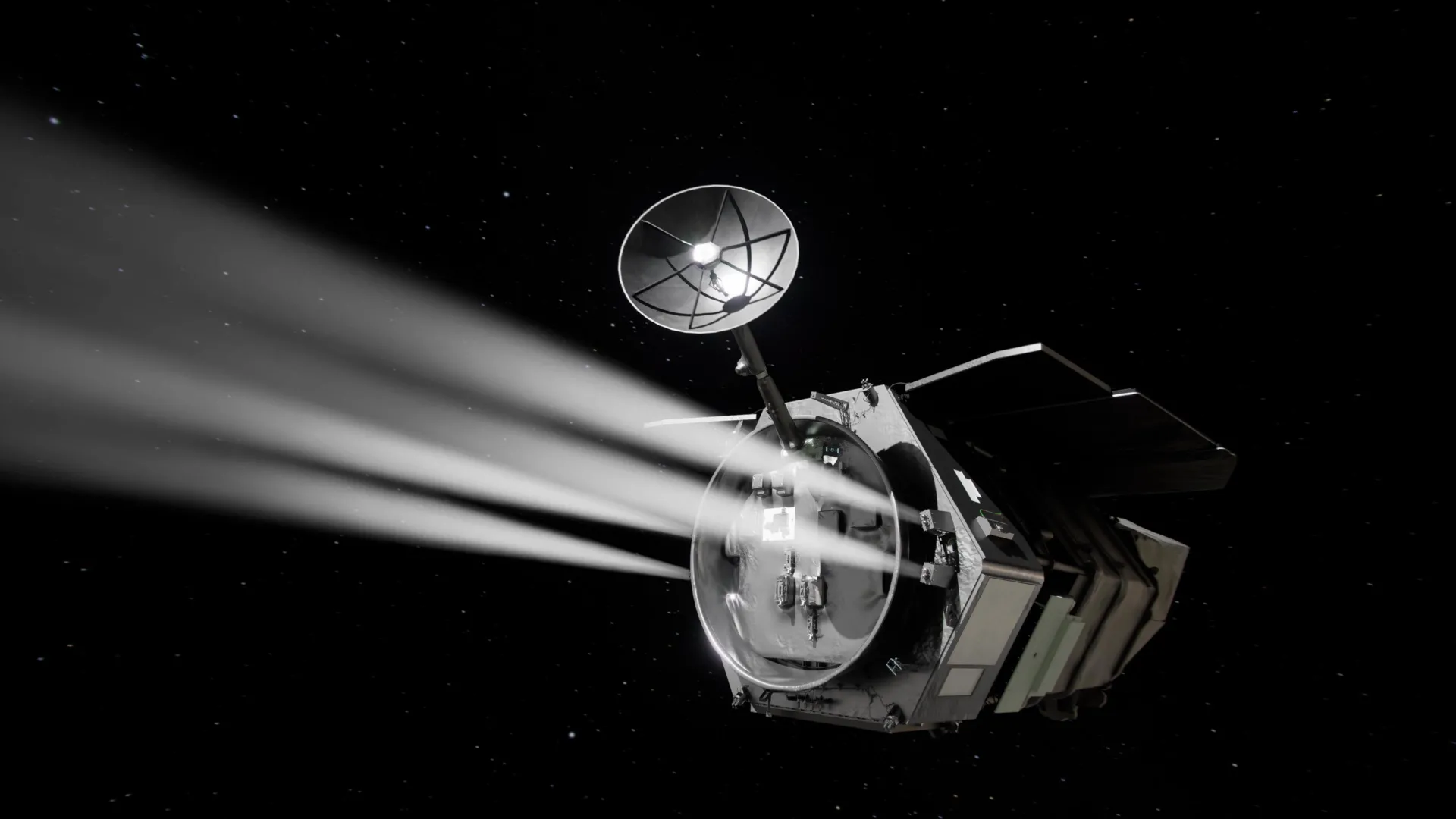
NASA's Nancy Grace Roman Space Telescope may be able to operate for far longer than originally expected. An exceptionally precise first mid-course correction, combined with other fuel savings, could more than double the observatory's potential lifetime in space. "As a result of exquisite planning by our orbital dynamics team, brilliant execution by the operations team, and a precise launch from SpaceX, Roman has fuel for at least 22 years of potential science operations," said Jamie Dunn, center director at NASA's Goddard Space Flight Center in Greenbelt, Maryland.
Several factors are behind that dramatic extension. Roman used far less fuel than expected during its first course correction, carried additional propellant at launch, and is projected to conserve even more during its second mid-course correction and orbital insertion. Roman Was Originally Designed for 10 Years Roman was built around a five-year primary mission and a five-year extended mission, giving it a total fuel budget intended to support 10 years of operations.
Because propellant is the spacecraft's main consumable resource, every kilogram saved during its journey can potentially translate into additional years of scientific observations. Roman carried out its first burn on Aug. 31, adjusting its path toward the observatory's eventual orbit. Since then, the mission team has been studying how the maneuver affected Roman's long-term fuel outlook.
The results were better than expected. The maneuver was completed with more than 99% accuracy and consumed less than 10% of the fuel reserved for it. Roman used about 40 pounds (18 kilograms), compared with the planned allocation of 441 pounds (200 kilograms).
Those savings alone could provide roughly four additional years of potential science operations. Extra Fuel at Launch Could Add Another Four Years Roman also began its journey with more propellant available than planners originally expected to need. Engineers calculated the spacecraft's fuel requirements using a conservative maximum weight of 21,605 pounds (9,800 kilograms).
Roman ultimately weighed just 17,760 pounds (8,056 kilograms) at launch. Because the spacecraft was lighter, it required less fuel for its mid-course correction. Its lower mass also allowed the team to fill Roman's propellant tanks to capacity rather than carrying only enough fuel for the original 10-year mission.
Extract — continue reading at the source.