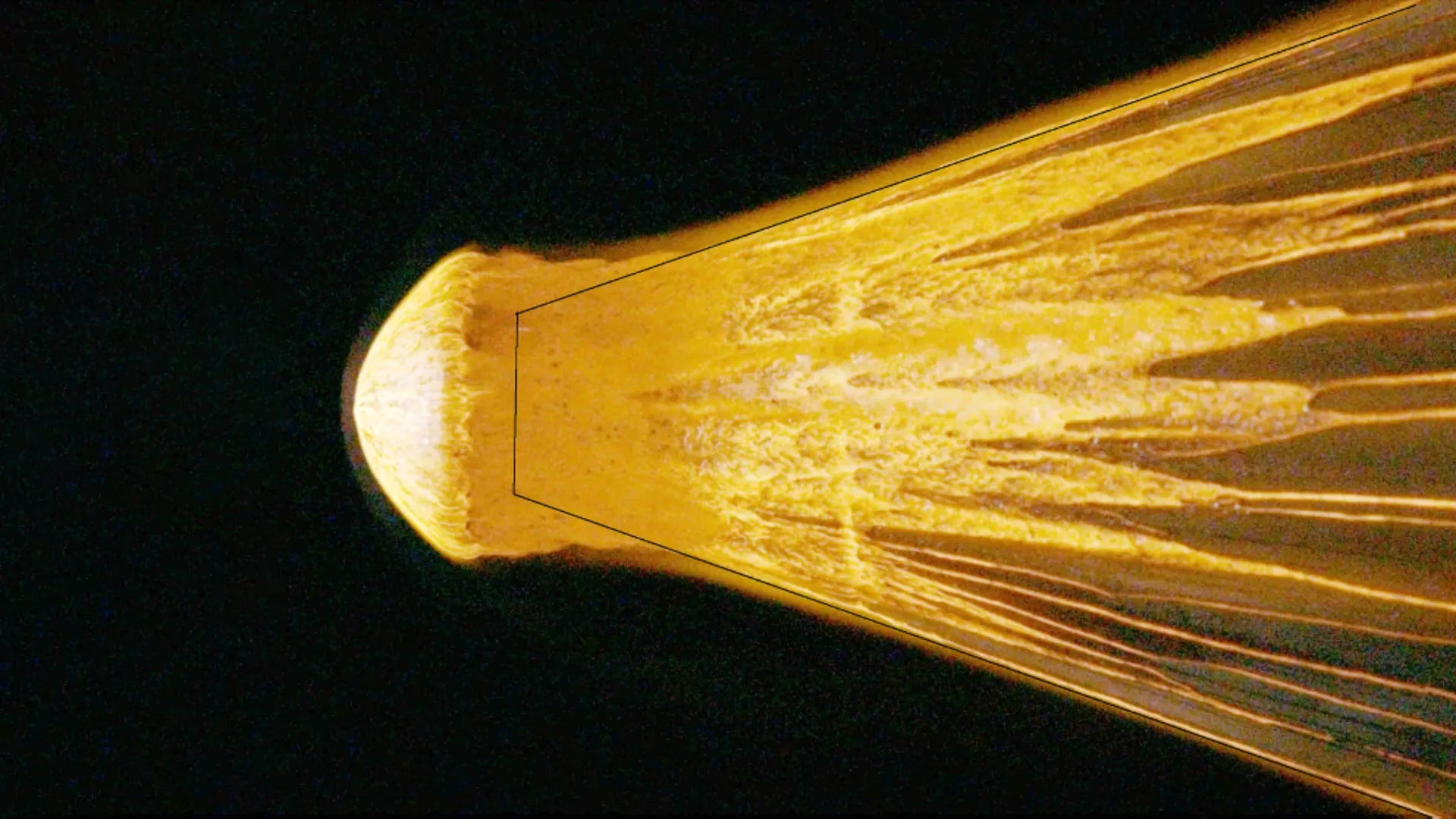
Scientists have pushed X-ray generation beyond a long-accepted limit in laser physics, revealing a surprising quantum effect that conventional theory does not account for. By directing powerful ultraviolet lasers at helium atoms, researchers produced X-rays with substantially higher energies than the standard model predicts. The breakthrough depends on an unusual interaction between two electrons that allows them to release their energy together.
The discovery comes from a collaboration between TU Wien and the University of California San Diego and builds on research that helped establish the field of attosecond physics. Laser techniques developed at TU Wien in the 1990s contributed to advances recognized by the 2023 Nobel Prize in Physics. For decades, scientists have understood that directing laser light at certain atoms can cause them to emit extremely short pulses of much higher-frequency light, including X-rays.
However, the established theory predicts a maximum energy for these emissions based on the properties of the incoming laser. Beyond this boundary, known as the energy cutoff, X-ray production becomes extremely weak. The new experiment demonstrates that this familiar limit can be exceeded when two electrons interact in a particular way.
The findings were published in Nature Photonics. How Lasers Generate Powerful X-Ray Pulses "The mechanism behind short X-ray pulses has been well known for a long time," says Prof. Tenio Popmintchev from the Institute of Photonics at TU Wien.
"The laser tears a single electron away from the atom. The electron is then accelerated in the laser's electric field until it eventually collides with the atom again. The energy it loses in the process is emitted in the form of light." During this process, the laser's electric field drives the freed electron away from its parent atom before bringing it back.
When the electron returns and releases its energy, it generates light at frequencies far higher than those of the original laser beam. Nobel laureate Ferenc Krausz used this mechanism in pioneering experiments during the 1990s. Tenio Popmintchev and his colleagues now work at the same TU Wien institute where Krausz conducted his earlier research, but their latest experiment has pushed the process beyond its previously understood boundaries.
Extract — continue reading at the source.