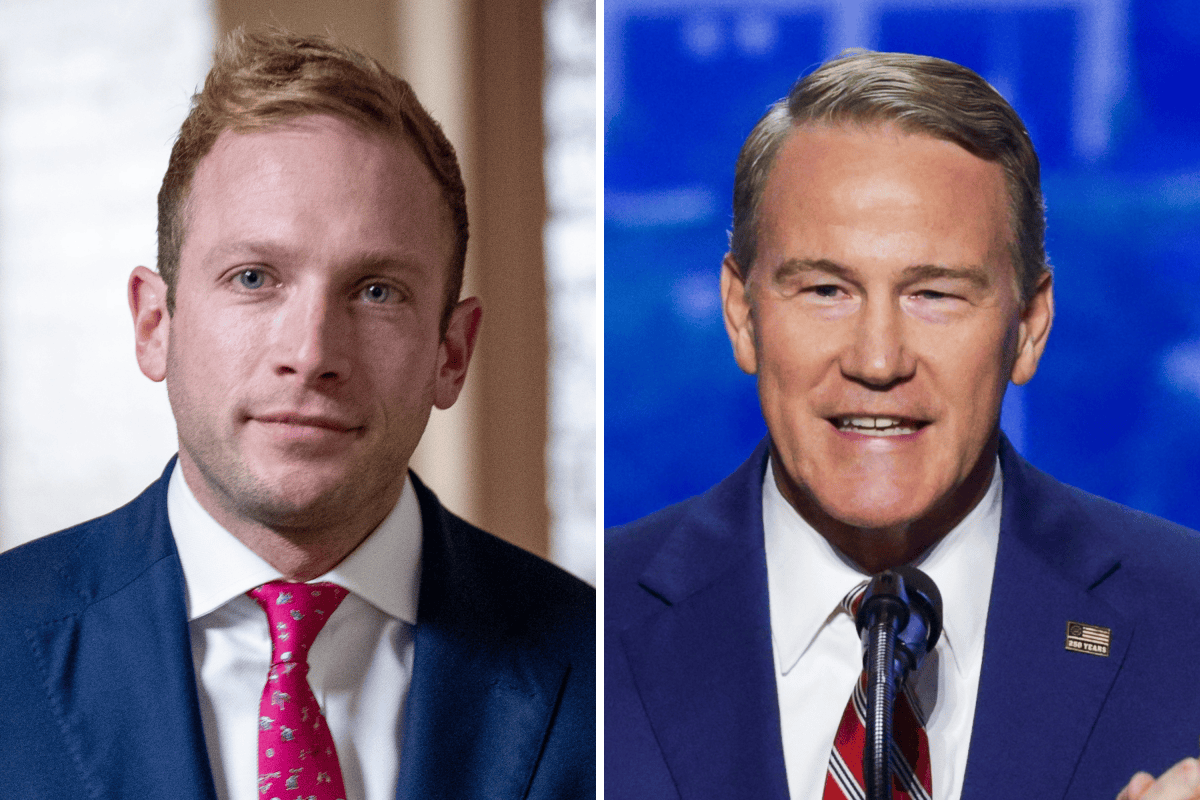
As Ohio’s Senate race emerges as a critical battleground, Republican Senator Jon Husted faced attacks from GOP Representative Max Miller on the campaign trail, according to a new report from The Wall Street Journal. Husted is facing a competitive reelection challenge from former Senator Sherrod Brown, a Democrat, in the Ohio Senate race. Brown has built a narrow but consistent lead in recent polls, suggesting the race will likely come down to the wire on November 3.
Democrats are increasingly optimistic about their chances of flipping the seat despite Ohio’s conservative drift over the past decade. It is one of the most closely watched races that could determine which party controls the U.S. Meanwhile, Miller is also facing a closely contested race in Ohio’s 7th Congressional District, comprised of suburban areas near Cleveland and northeastern Ohio.
He has faced allegations of abuse against his ex-wife, though he has denied any wrongdoing. Husted has called on Miller to resign from office and end his reelection campaign over the accusations. The Wall Street Journal reported on Tuesday that Miller has been critical of Husted during campaign stops, including calling him “as smart as a box of rocks” and “as entertaining as a two-by-four.” He also said his own “chances of winning are much better than his,” according to the report.
Newsweek reached out to the Husted and Miller campaigns for comment via email. Recent polls show Husted trailing Brown by a very narrow margin in the Ohio Senate race. The race is expected to be close.
The Cook Political Report classifies it as a pure toss-up that could determine which party controls the Senate. Brown led by 3 points in the latest survey from The New York Times and Siena University, with 49 percent saying they planned to vote for him compared to 46 percent supporting Husted. The poll surveyed 616 likely voters from September 22 to October 1 and had a margin of error of plus or minus 4.5 percentage points.
A Suffolk University poll also gave Brown a 3-point lead, 47 percent to 44 percent. It surveyed 500 likely voters from September 23 to 27, and had a margin of error of plus or minus 4.4 percentage points. Brown had a narrower lead in the latest InsiderAdvantage survey, which showed him up by a single point, 44 percent to 43 percent.
Extract — continue reading at the source.