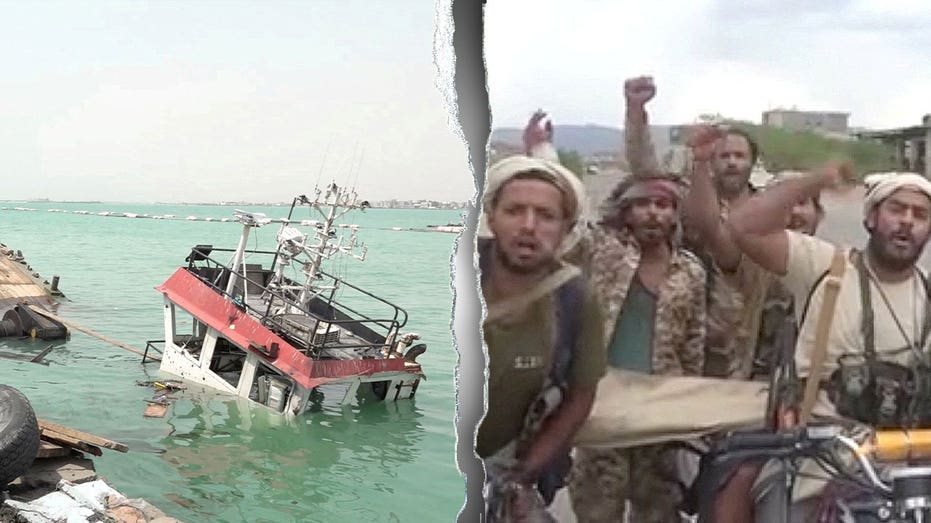
The U.S. is choking off Iran’s oil exports through the Strait of Hormuz. But the routes meant to shield other Gulf producers from that disruption are now coming under pressure themselves. A drone attack last week badly damaged Saudi Arabia’s East-West Pipeline, a critical bypass that carries crude oil across the kingdom to the Red Sea.
Repairs could leave it largely out of service for three to five weeks after it had been moving roughly 2.6 million to 4 million barrels per day in recent weeks. At the same time, Iran-backed Houthi rebels have seized additional territory and strategic islands around the Bab el-Mandeb Strait — which connects the Red Sea to the Gulf of Aden and the Indian Ocean — adding pressure to another major shipping route already battered by years of attacks. And those repeated disruptions are already reaching American consumers.
NEW RISK FOR US CONSUMERS AS IRAN-BACKED ATTACKS THREATEN A SECOND MAJOR OIL CHOKEPOINT U.S. diesel prices hit a record national average of $6.23 a gallon Monday, according to AAA, while regular gasoline averaged $4.32. Brent crude climbed as high as roughly $110 a barrel during the day. Washington has sharply curtailed Iran’s oil exports and trade, but the wider conflict is still disrupting energy supplies elsewhere in the region, espcially as Iran-backed Houthi rebels strengthen their stance along the coastline in Yemen.
THE OVERLOOKED WAY THE IRAN WAR IS MAKING GROCERIES, AMAZON PACKAGES AND NEW HOMES MORE EXPENSIVE The question now is whether Iran is hurting enough to make the concessions Trump wants — and how much economic damage Tehran and its allies can still inflict while it holds out. The economic pressure on Tehran is mounting. Iran has gone weeks without sending meaningful new crude exports through Hormuz.
Since the United States reinstated its naval blockade July 14, no Iranian crude cargoes have successfully crossed the strait to China, Tehran’s largest remaining oil customer, according to Kpler, Vortexa and TankerTrackers.com. Iranian crude and condensate loadings fell to roughly 220,000 to 255,000 barrels per day in August, down from about 740,000 in July and roughly 2 million in March. Commercial shipping through Hormuz also remains deeply disrupted.
Recent readings from Kpler, which track real-time data on global commodity flows and maritime shipping, have repeatedly put visible commodity-vessel transits in the single digits, even as the U.S. has worked to restore some movement through the waterway. Miad Maleki, a senior fellow with the Foundation for Defense of Democracies, said the pressure is increasingly reaching beyond Iran’s oil industry and into the broader economy. HORMUZ CRISIS HIDES A DEEPER OIL THREAT THAT COULD OUTLAST THE WAR "There are a series of indications" that the pressure is working, Maleki told Fox News Digital, citing the combined effect of sanctions, the naval blockade and growing diplomatic isolation.
Extract — continue reading at the source.