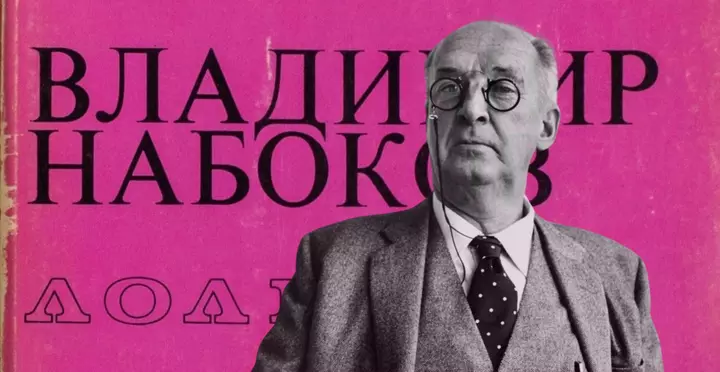
There it is, at the bottom of a dollar bin: Vladimir Nabokov’s first novel, Mashenka. Magenta cover, simple black type. I lift it by the edges, gingerly, as if it didn’t just spend God knows how many years crushed under stacks of People magazine from the 1970s.
I carry the book to the register. The cashier unfolds a plastic bag, clicks around on his computer. I hold out my credit card, impatient to go outside and examine it properly—the carriage-and-horseman logo, the photo of pince-nez’ed Nabokov inside, the delicate pre-Revolutionary orthography.
The cashier keeps clicking. The computer whirs, he clacks his teeth, all while my heart is in my feet. Finally, he says, I remember it because he said it like that.
As if it was a law of nature. The cashier nods, already stowing the book under the counter. They would publish literature that wasn’t meant to exist.
This longing is built into its name. That’s why I’ve scoured the Earth for it. I want to give him the facts, the numbers: 1971—Ardis’s founding, 1972—Brodsky’s immigration, 1974—first Nabokov editions—to prove to him that I should be the rightful owner of the book, that my devotion and commitment entitle me to it.
I’m embarrassed to be indignant; I know that the store is under no obligation to sell me anything. I’m indignant just the same. A Nabokov scholar and a Bulgakov scholar walk into a bar—a love story for the ages.
Extract — continue reading at the source.