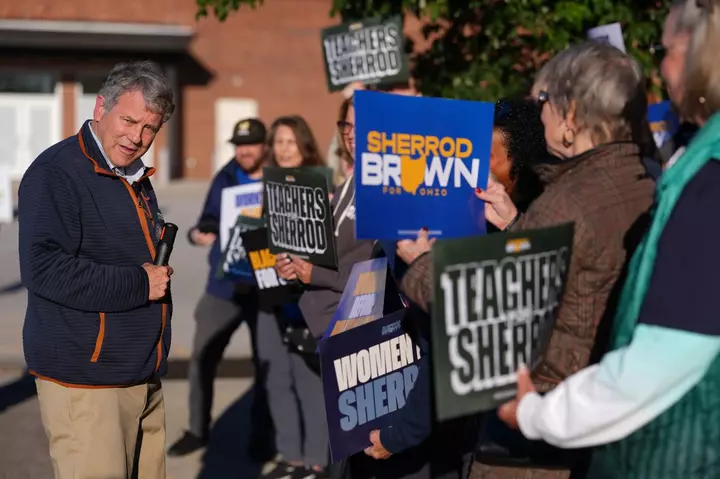
From 1896 until 2016, the presidential victor won Ohio in all but two elections. However, Donald Trump’s dominance in the state has led many to conclude that Ohio has moved from purple to red. After all, in 2024, he won by 11 points and the lone statewide Democrat, Sherrod Brown, was bounced from the Senate.
But to channel Ferris Bueller, “Life moves pretty fast,” and suddenly Democrats appear to have a bona fide chance to have Brown reclaim a spot in the Senate and to win the governorship this fall. Whether one believes in the accuracy of the polls or not, Republicans themselves must believe the state is close, as any Ohioan with a pulse cannot escape the barrage of political advertising saturating televisions, streaming services, social media, billboards and mailboxes. Suddenly it feels like 2004 all over again.
But it also suggests something more about what it means to be successful in Ohio, and that lies in populist messaging rather than partisan messaging. Populism can take many forms, but I focus on issues that pit ordinary citizens against concentrated political or economic power, regardless of whether that power is associated with government, corporations or cultural elites. For years analysts have viewed Ohio through the lens of culture wars and partisan polarization.
While often true, it tells only explains part of Ohio’s political landscape. In August, 2023, Ohioans decisively rejected an attempt to make it harder to place a constitutional amendment on the ballot by a 57 percent to 43 percent margin. Just three months later, Ohioans enshrined abortion access in the state’s Constitution (57 percent to 43 percent) and legalized recreational marijuana (57 percent to 43 percent).
Neither of these issues aligned with the stances of Republican leaders in the state, but both suggest a belief in self-determination and limited government. Both are staples of traditional populism and not owned by either of the two main political parties. Our own BGSU/YouGov polling suggests economic populism could also be moving voters in the state.
The economy remains the most important issue to voters, followed closely by inflation. Notably government corruption is also among the top issues. Nearly two-thirds (65 percent) say the economy has gotten worse in the past year and 61 percent say the country is on the wrong track.
Extract — continue reading at the source.