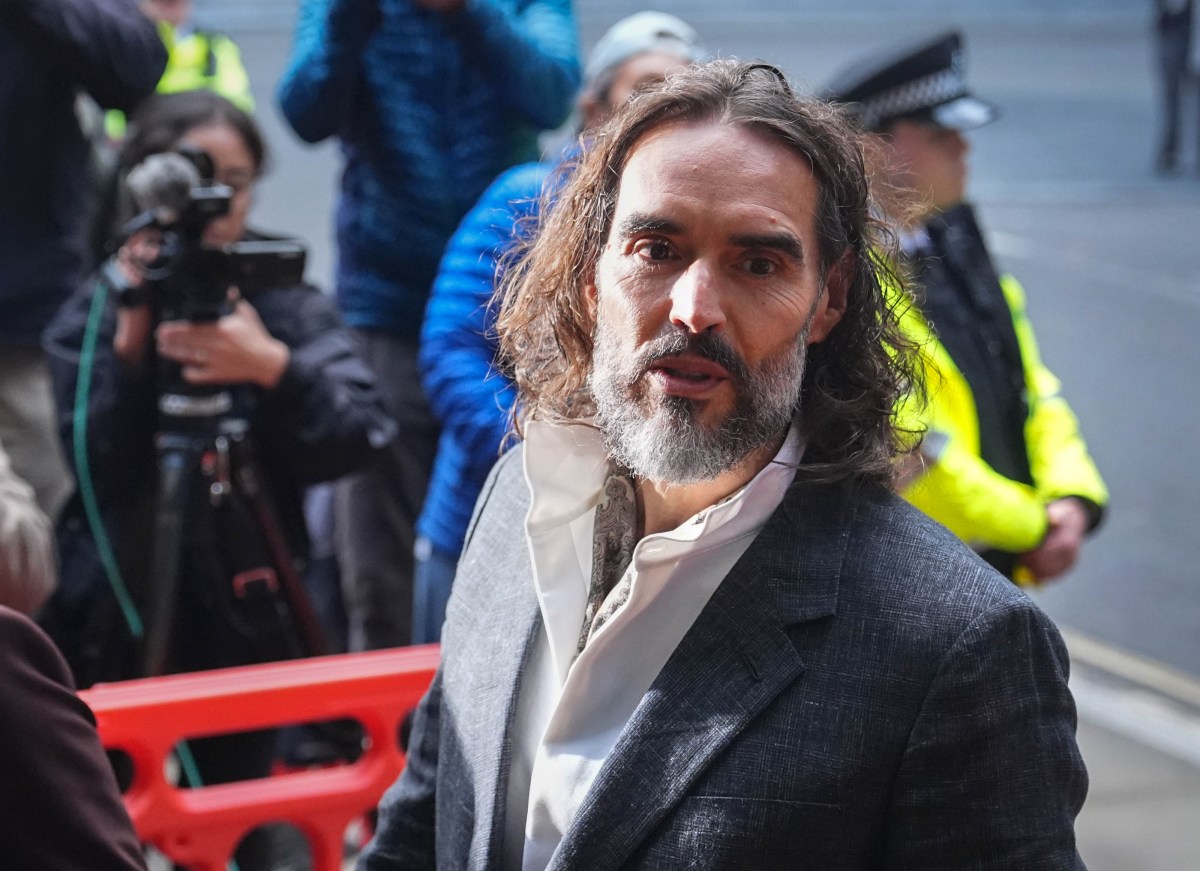
Russell Brand faced the kind of allegations that might once have ended a celebrity's public life. Accused of rape and sexual assault, the former British comedian found himself effectively excluded from the entertainment establishment that had made him famous. Rather than disappear, Brand has managed an improbable reinvention.
The former sex symbol, once famous for his promiscuity, is now a born-again Christian living in Florida, publishing books about finding God and preaching to an American audience suspicious of almost every institution that once made him famous. Say hello to Saint Russell of Florida. On Monday, Brand returned to London for the start of his trial on seven charges, including three counts of rape, three counts of sexual assault and one count of indecent assault, involving six women.
He has pleaded not guilty to every charge and consistently denied the allegations against him. His guilt or innocence is for a jury to determine. Whatever the outcome, Brand's journey from Hollywood celebrity to Christian anti-establishment commentator raises a pointed question about cancel culture.
What happens when a man facing serious criminal allegations can borrow the language of ideological persecution to rehabilitate his public image? And what does that say about today's culture? To clarify the distinction, when someone like WNBA player Sophie Cunningham faces backlash for expressing an unpopular political or cultural opinion, the argument about cancel culture concerns the boundaries of acceptable speech.
Should that person lose professional opportunities or public standing because their views offend the sensibilities of a particular sect of the audience? Brand's situation is different, obviously. He is not standing trial because he expressed an unpopular opinion about, say, vaccines, but because prosecutors have accused him of serious sexual offenses, which he denies.
Yet in the peculiar political climate we inhabit, both circumstances can be folded into the same narrative—a brave individual punished by powerful institutions for refusing to conform. It's a remarkably convenient arrangement. Suddenly, the word canceled can describe someone ostracized for an opinion and someone accused of a crime, as if the distinction were merely a matter of degree.
Extract — continue reading at the source.