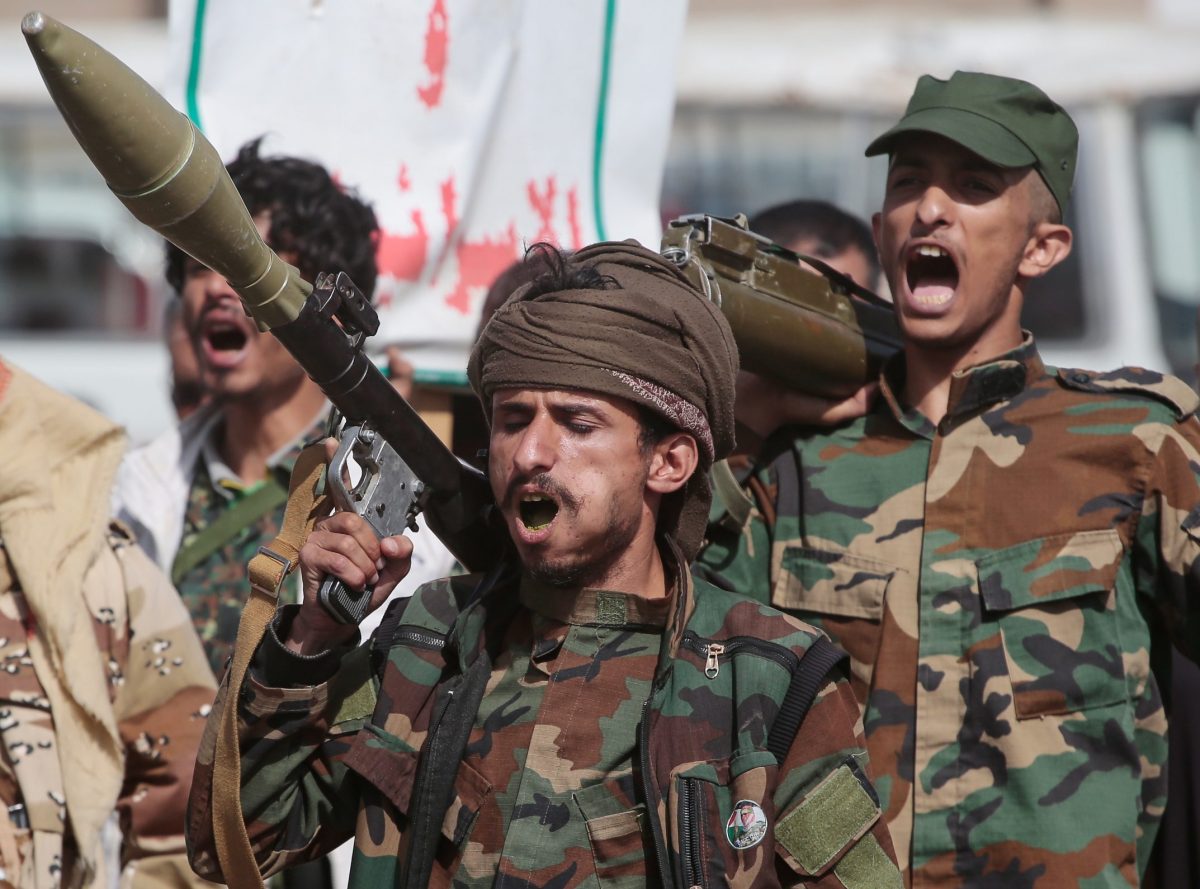
More than a decade ago, Saudi Arabia went to war in Yemen to stop the Houthi rebel group from becoming an entrenched armed power on its southern border. Today, we can safely say they failed. Last week, the Houthis surged out of their strongholds in northern Yemen to seize the Red Sea port of Mokha and several islands inside the Bab el-Mandeb Strait, strengthening their control over one of the world’s most important shipping corridors despite years of Saudi, American, British and Israeli strikes.
At the same time, Houthi missiles and drones have battered Saudi cities and energy infrastructure, and Riyadh on Tuesday claimed Saudi air defenses intercepted a drone headed toward the holy city of Mecca. The Houthis denied this, but the episode encapsulates the potential for this conflict to tumble over the precipice and hurtle toward catastrophe. For America and the rest of the world, the timing of the Saudi-Houthi flare-up could hardly be worse.
The U.S. and Iran remain at an impasse that continues to throttle traffic through the Strait of Hormuz—and Trump’s approval ratings. Bab el-Mandeb normally carries about 12 percent of global trade and is an alternate route for Saudi oil exports, but now the Houthis have an even greater capacity to make that route more dangerous and expensive, and force the global economy to foot the bill. For the Saudis, the stakes are even greater.
Oil exports have fallen sharply, its critical infrastructure is under attack, and Crown Prince Mohammed bin Salman’s ambitious plans to convince global investors that Saudi Arabia is stable, secure and open for business are taking a beating. With the help of regional and security experts, Newsweek explores three possible paths forward from here. On paper, Saudi Arabia has an enormous military and economic advantage over the Houthis—a non-state movement in a country where nearly two-thirds of households lack adequate food, according to the World Food Program.
But, just as Washington made the uncomfortable discovery that its overwhelming military power was unable to prevent Tehran from placing the Strait of Hormuz in a stranglehold, the Houthis possess an outsized ability to inflict pain on Riyadh. Saudi Arabia has been at war with the Houthis since 2015, pounding the rebel forces with airstrikes while funding and backing a coalition of forces aligned with Yemen’s internationally recognized government to fight them on the ground. The Houthis have withstood it all, and are evidently capable of striking back.
Riyadh could therefore "accept the new reality and return to the political track, including addressing some of the Houthis’ demands," to settle the conflict and prevent further damage to its energy infrastructure, Ahmed Nagi, senior Yemen analyst at the International Crisis Group, told Newsweek. But last week’s offensive has dramatically improved the Houthis’ hand in negotiations. Capturing Mokha and Mayun Island has strengthened their ability to threaten global shipping through Bab el-Mandeb and restrict southbound Saudi oil exports.
Extract — continue reading at the source.