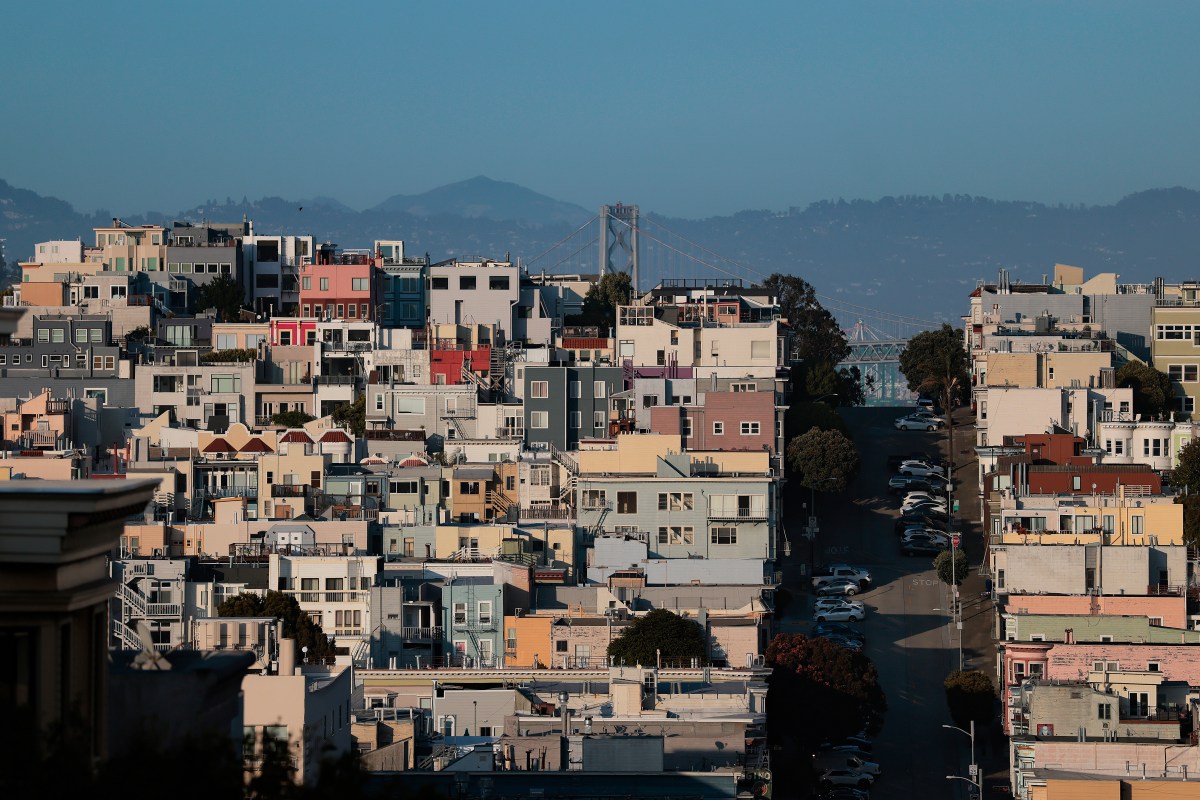
Renting a starter home still costs less than buying one in every major U.S. metropolitan area, according to a new study by real estate platform Realtor.com, but the availability of these properties is rapidly shrinking for renters, recent data shows. The national median asking rent for 0-2 bedroom properties across the 50 largest metros was $1,695 in July, down $24, or 1.4 percent from a year earlier, based on the Realtor.com July 2026 Rent Report. Across the same metros, the monthly cost of buying a starter home was $2,553 last month, $858 more expensive than renting.
This estimate was made considering the median list price of 0-2 bedroom home listings, a 10 percent down payment, a monthly mortgage payment based on the 30-year fixed mortgage rate, homeowners association (HOA) fees, taxes, and homeowners insurance averaged at the metro levels. But single-family rentals—which extend beyond starter homes alone—are becoming harder to find for Americans. In 2024, according to an analysis of Census data published by Redfin earlier this year, only 13.7 percent of single-family homes (11.3 million units) were occupied by renters—the third lowest level on record.
By comparison, there were 12.1 million rental units in large multifamily buildings in the same year—the highest level on record—10 million rental units in small multifamily buildings, and 3.1 million townhome rentals. This is a new reality for America. As recently as 2021, single-family homes made up the largest share of the country’s rental stock.
On the other hand, before 2019 and the home-buying frenzy that characterized the pandemic, large multifamily buildings were only the third-highest option behind single-family rentals and small multifamily buildings. It is a seismic change for the country, which has long made the dream of homeownership and living in an independent, single-family home a pillar of its identity, as well as a mark of personal success. These recent figures show how the American Dream has shifted for many Americans who have not yet stepped onto the property ladder: a majority of renters are not living in the traditional ‘dream home,' a single-family home, but in large apartment buildings.
These now serve as their primary option, with 33.1 percent of Americans living in one as of 2024, according to Redfin. This shift happened mainly because the country built multifamily buildings—defined as properties with 20+ units—at a faster pace than single-family homes since the Great Recession, but especially during the pandemic, when most of these properties went to homebuyers, not renters. Many of these homeowners are now locked into their homes with high mortgage rates, with the national 30-year fixed-rate mortgage averaging 6.65 percent as of the week ending August 20, according to Freddie Mac.
The result is that multifamily rentals remain more affordable than the shrunk stock of single-family homes, which are increasingly becoming a privilege for homeowners only—and, even then, only those who can afford them. Rising construction costs, strict zoning laws and minimum lot sizes, together with changes in the industry, have led to a decline in the number of starter homes that are built across the country, in particular. Starter homes accounted for about 40 percent of new construction in the early 1980s, but only 7 percent by 2019, according to an analysis of Freddie Mac data by the Homebuying Institute.
Extract — continue reading at the source.