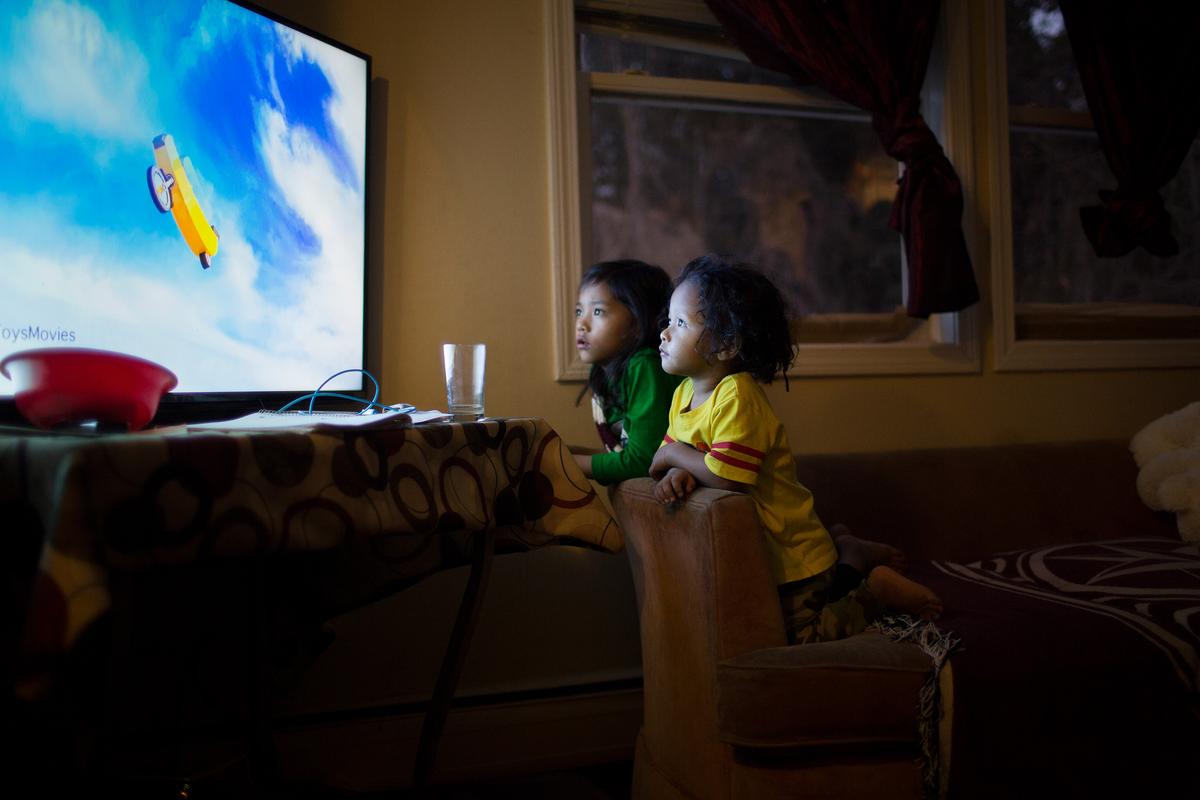
He holds an iPad close to his chest, almost in a cramp, clutching the screen as if it might otherwise run away. I hear loud clapping hands and squeaking children’s voices. I lean over and see a cartoon character in green snatch a toy from another character in pink.
The pink character begins to cry, tears splashing from enormous eyes like sprinkles. The green character shouts sorry. Instantly, the tears stop and a wide smile replaces the tears before I have blinked.
And, before I have even worked out whether the characters are speaking English or Arabic (as the mother does to the boy), the scene has changed and the two characters are rowing a boat with a random song in the background. The boy’s eyes dart on the screen from right to left, centre, down. His body is still but his attention is being hurried from cue to cue.
This is the problem I have come to think of as the pace of children’s media. Children’s media are usually judged by their content and quantity: how many minutes watched and whether it was educational, age-appropriate, diverse, prosocial, commercial or safe. These questions matter and, with my colleagues, I have studied them through experiments and contributed to guidelines, regulations, or toolkits for designers.
But we have been missing a bigger design feature that may be just as consequential: the time a medium gives a child to make meaning. A programme or app can contain good lessons and still move too quickly for those lessons to settle. For instance, in the US animated educational series Ask the StoryBots (2016-20), the subject matter may be genuinely rich – why the sky is blue, how eyes work, or where planets come from – but the explanation unfolds through rapid jokes, songs, visual shifts and sudden changes in style.
Before a child has time to sit with one image or idea, the scene has moved on to the next, with a burst of information. Different media have different temporal demands: a digital picture book, a game, a television episode and an app each ask a child to attend differently. But, across media, the important question is whether the pace suits the experience that the narrative claims to support.
Extract — continue reading at the source.