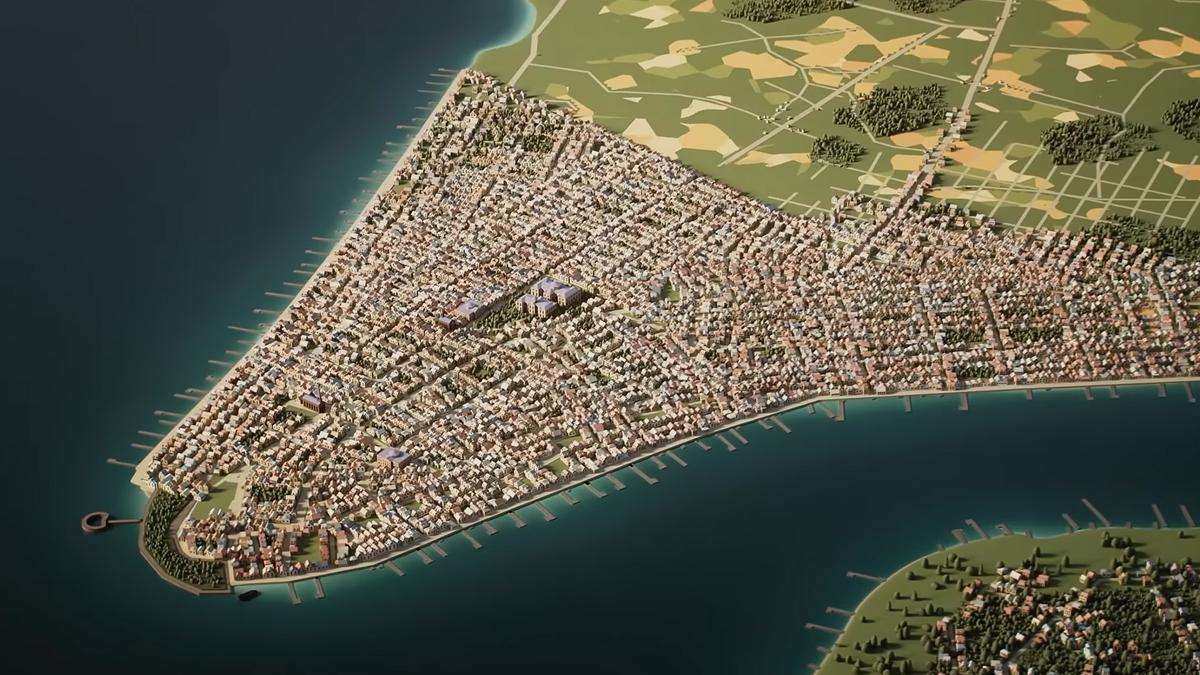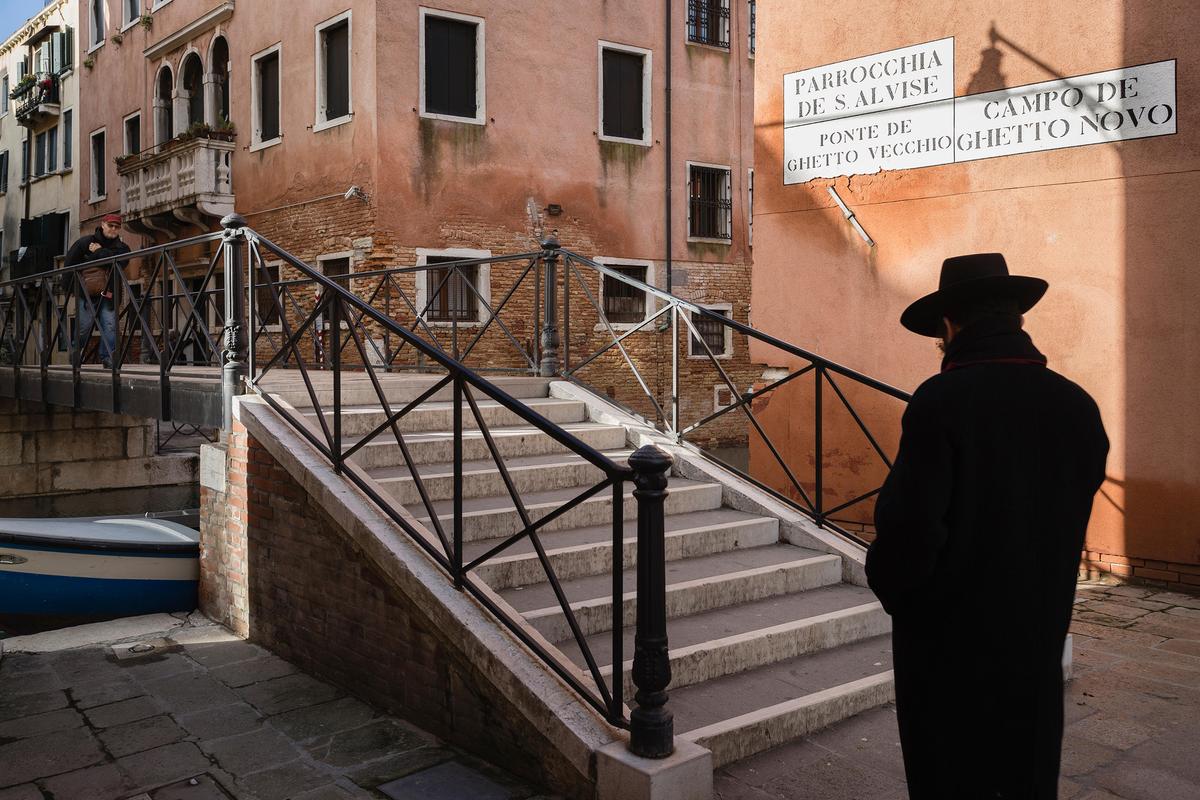
Photo by Antonio Violi/Alamy On 29 March 1516, the Venetian Senate voted to create the world’s first ‘ghetto’. All Jews then living in the city – as well as any others who might come later – were ordered to move immediately to a small island in the northeastern sestiere of Cannaregio, a neighbourhood known as the geto novo. It was anything but appealing.
Previously used as a dumping ground for the communal copper foundry, it had been converted into a residential quarter for local workers. From the outside, it already looked ‘like a castle’ – ringed by canals and bounded by perilously tall tenements. But by the time Venice’s Jews were herded in, it seemed more like a prison.
All outward-facing doors and windows were blocked up; extra walls were built to close off access to the water; and a pair of sturdy iron gates were placed at either end of the bridge leading to Cannaregio. These were closed at sunset and opened in the morning at the ringing of the marangona bell. And just to be sure that no one could sneak out when they weren’t supposed to, four guards – paid for by the Jews themselves – patrolled the canals around the Ghetto ‘day and night’.
It was not the first time that Jews had ever been confined to a separate quarter, of course. By the early 16th century, Jews in France and in German lands had already been living in designated neighbourhoods, physically distinct from the surrounding areas, for close on 300 years. Nor was it even the first time Venice itself had toyed with the idea of Jewish confinement.
Back in the 13th century, it had already obliged Jews in its Cretan colony’s capital Candia (now Heraklion) to live in a separate area. What made the Ghetto unusual was its name. Etymologically speaking, of course, the word geto had nothing to do with Jews.
Derived from the verb gettare, meaning ‘to throw’ or ‘cast’, it was just the local name for a foundry (geto) – and, by extension, for the dump next door. But even after the Venetian government moved the foundry elsewhere, people kept on calling the area by its old name. And when the Jews moved in, the island soon lent its name to the institution of segregation, too – a bit like how, today, we can use ‘the White House’ to refer both to 1600 Pennsylvania Avenue and to the administration that’s based there.
Extract — continue reading at the source.