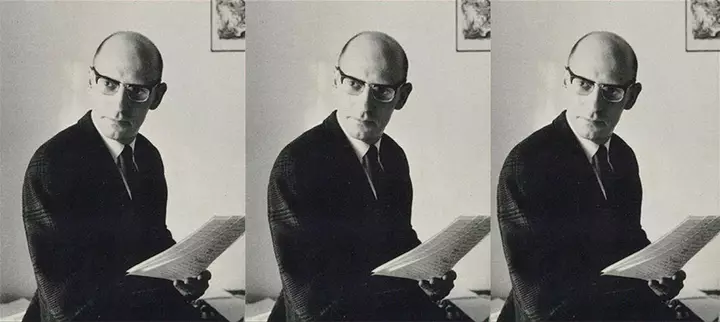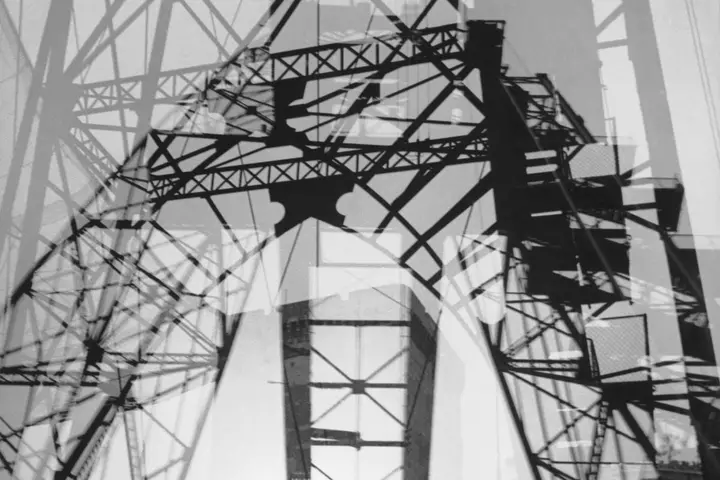
Photo by Herbert List/Magnum Photos On the evening of 8 September 1930, the German mathematician David Hilbert stepped up to a microphone in Königsberg and addressed his countrymen by radio. He was 68, recently retired, and at the height of his fame. The talk was a defence of pure reason, delivered in the city of Immanuel Kant, and it ended with two phrases that would later be carved on his tombstone: Wir müssen wissen.
Are certain questions closed to the human mind? Are there truths about the world that we can never know? Hilbert thought that, at least within mathematics, this could not be the case.
For him, mathematics was a game played with symbols: one could fix the right axioms as rules of the game and every mathematical problem could be solved. The day before his Königsberg address, at a small academic meeting in the same city, a 24-year-old Austrian named Kurt Gödel had quietly announced that no such system for arithmetic could exist. Whatever reasonable set of rules you fix, something true must lie beyond them and thus beyond our knowledge.
Gödel’s results, known as the Incompleteness Theorems, are landmark achievements of 20th-century logic. Recent work in philosophy and mathematics has begun to illuminate the gap they opened, and with it something deeper about the foundations of knowledge itself. The story begins in the same city, but two centuries earlier.
When Kant remembered a book by David Hume he’d read years earlier, he was woken from what he called his ‘dogmatic slumber’. Kant had believed that pure reasoning could teach us every absolute truth about the world, but Hume had asked a question that that stumped him: what reason do we actually have to believe that the future will resemble the past? We may have seen the Sun rise a thousand times, but how do we know it will rise tomorrow?
The belief that the future will resemble the past is, Hume argued, merely a kind of habit. Kant couldn’t answer Hume’s challenge and was silenced for a decade. For Hume, proving a theorem was like unpacking a suitcase to find an outfit.
Extract — continue reading at the source.