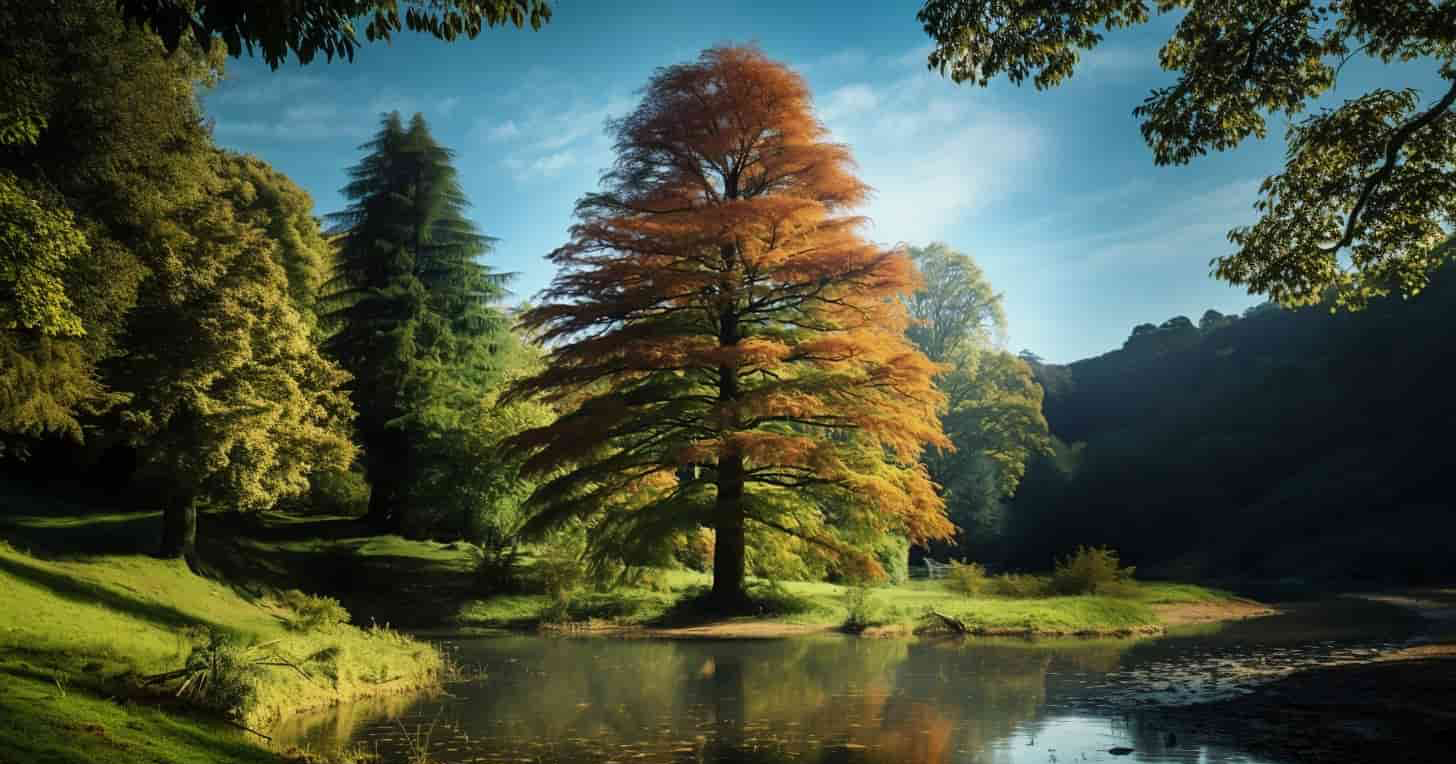
Sixty million years ago, when tropical climes covered the Arctic, a small redwood species developed an unusual adaptation that shaped its destiny: Despite being a conifer — needle-leaved trees that are usually evergreen — it became deciduous, losing all of its needles during the months-long lightless winter to conserve energy, then growing vigorously in the bright summer months — the fastest-growing of the redwoods. With this uncommon competitive edge, it conquered large swaths of the globe, spreading the seeds of its handsome cones across North America and Eurasia. But when the global climate plunged into the Ice Age, its victory march came to an abrupt halt.
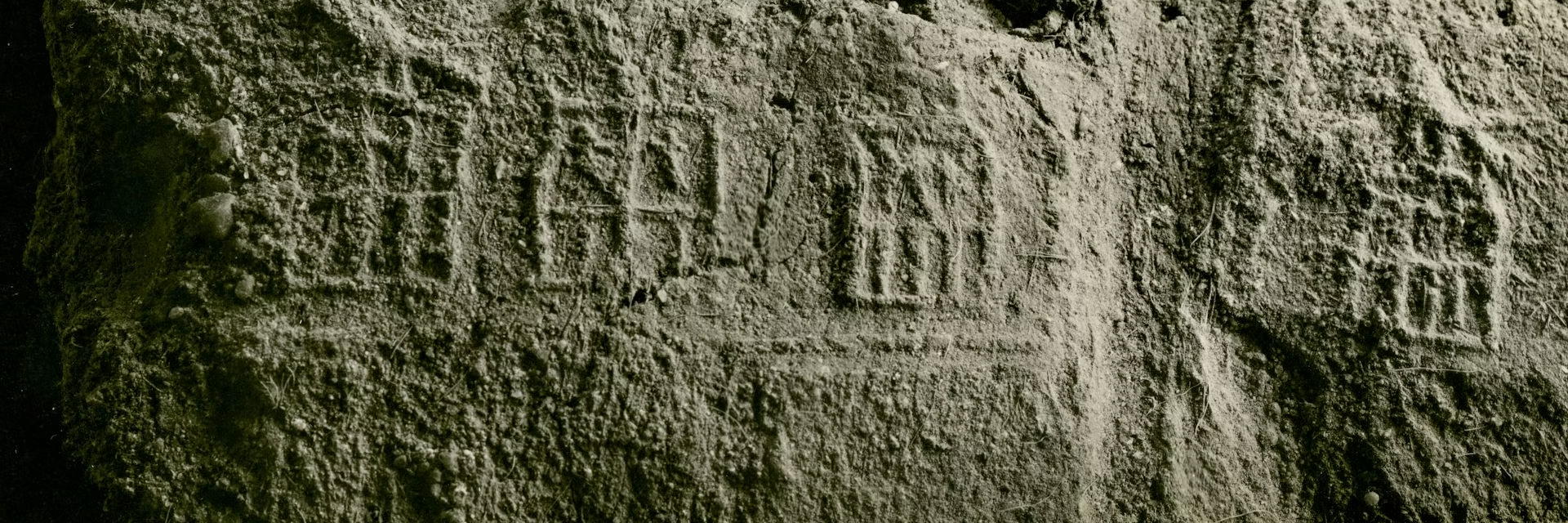
We know this because, at the peak of WWII, Japanese paleobotanist Shigeru Miki discovered fossils of this small, mighty redwood species. Nothing like it had ever been described in the botanical literature, so he deemed it extinct, naming it Metasequoia after its kinship to Earth’s most majestic tree. The World War was still raging when a Chinese forester traveling through Central China in the winter of 1941 came upon a majestic old tree of a kind he had never seen before.
There was a small shrine at its foot, where locals had been lighting votives and leaving offerings for decades. They called it, he learned, shui-sa, or “water fir,” for its love of moist soil — a name he had never heard before. Because the tree was already denuded of needles for its seasonal hibernation, he was unable to collect a proper specimen for identification — but he told other foresters and botanists of it, until word reached Zhan Wang, director of China’s Central Bureau of Forest Research.
Intrigued by this unheard of species, Wang set out to see it for himself and to collect specimens, which he shared with colleagues. One of them was Hsen Hsu Hu. A diligent paleobotanist, he had read of Miki’s fossil discovery five years earlier.
As soon as he saw the peculiar needle pattern, Hu recognized the “water fir” as a Metasequoia. Here was a living fossil — a lovely ghost of evolution that had somehow survived the unsurvivable. Across the flaming divide that placed China and Japan on opposite sides of the World War, a small group of scientists had transcended the deadly artifice of borders and the ugliness of weapons to remind the world that the human longing for truth and beauty is greater than our foibles.
The first Chinese person to be awarded a Ph.D. in botany from Harvard University, Hu still maintained a relationship with Harvard’s Arnold Arboretum — one of the world’s largest living museums of trees. As news of this ancient tree began making international headlines, lauded by journalists as a “living vestige of younger world,” “as remarkable as discovering a living dinosaur,” the director of the Harvard arboretum cobbled together funds for a collecting expedition in China across the ashen world — one of the last collaborations between Chinese and Western scientists before the Chinese Revolution dropped its leaden wall for decades. As soon as the samples arrived at Harvard, the arborists planted several trees on Massachusetts soil — the first to grow in North America in more than two million years — and began distributing a kilogram of precious seeds to universities and botanical gardens across the globe.
Extract — continue reading at the source.