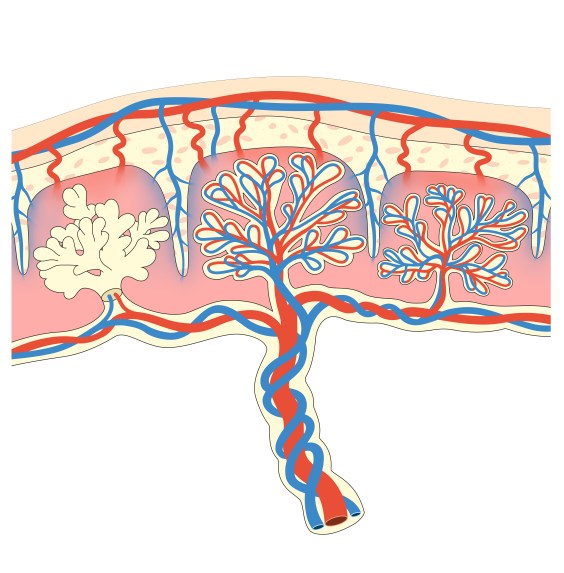
People say it looks like broccoli, a tree, a bowl, a pizza, a crescent moon, a Frisbee, a pancake. Etymologically, “pancake” is closest: Placenta means cake in Latin and comes from the Greek word plakoenta, which means flat cake. Per a Greco-Roman recipe that’s been dated to 160 B.C., in order to make the round, flat dessert called “placenta,” you need thin sheets of dough, cheese, honey, and bay leaves.
If you’re trying to make the organ called “placenta,” the recipe is, of course, trickier than that. Ancient civilizations gave the placenta great symbolic and spiritual importance. In some cultures, it was considered sacred because it protected the baby and represented the original mother-child bond.
People often buried or cremated the organ in rituals that persist in some cultures today: For example, members of the Southeast Asian Hmong community bury the placenta at home, under the belief that when a Hmong person dies, their soul returns to its birthplace and reunites with the placenta, which helps it travel to the spirit world. Most contemporary societies treat the placenta as biological waste and toss it straight into the incinerator after birth. But increasingly, the organ is ending up on the lab table, where it can teach us how it functions as an endocrine and immune interface between mother and child.
Research into placental formation has illuminated the underlying mechanisms of many pregnancy-related pathologies. Most notably, it has helped the medical community gain a greater understanding of preeclampsia, one of the most common pregnancy disorders, affecting approximately 5 percent of pregnant women. Clinically, preeclampsia is characterized by high blood pressure and elevated levels of protein in the urine (proteinuria).
In serious cases, it can provoke multi-organ lesions and hemolysis, elevated liver enzymes, and a low platelet count (HELLP syndrome). Preeclampsia is a multifactorial disorder involving genetic, immune, and vascular factors in both the mother and the fetus. One school of thought, though not the only one, suggests that these factors compromise the placenta’s capacity to adequately develop the blood vessels that connect it to the mother’s circulatory system.
As a result, those vessels can become narrower than normal, leading to dysfunction. At the start of pregnancy, when the fetus is small and needs little oxygen and nutrition, reduced blood flow is not a major problem. But as the pregnancy progresses and the fetus grows, so do its demands.
Extract — continue reading at the source.



/https://tf-cmsv2-smithsonianmag-media.s3.amazonaws.com/filer_public/0e/75/0e759221-7bae-4759-ae5c-ea84bbb4b9d5/screenshot_2026-10-09_at_33437pm.png)