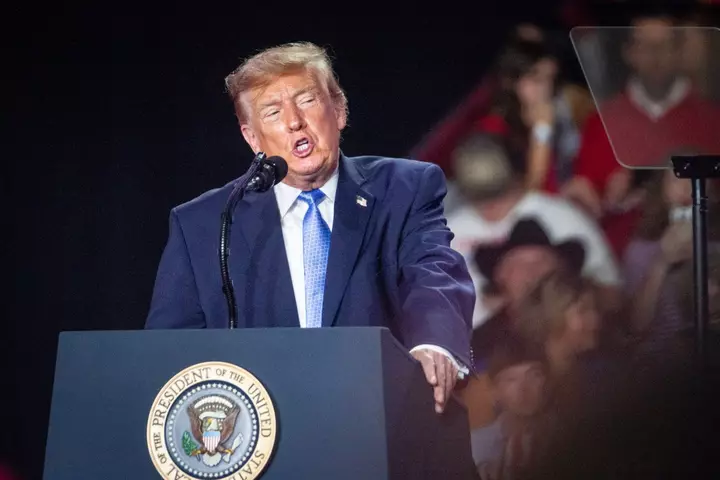
President Donald Trump took credit for Israeli Prime Minister Benjamin Netanyahu’s stronger-than-expected performance in Israel’s election on Tuesday, saying his endorsement “helped him a lot,” even as preliminary results showed Netanyahu falling short of the parliamentary majority needed to form a government. He said he had not spoken with Netanyahu about the results and cautioned that it was “a little bit early” to draw conclusions. The remaining count and negotiations over potential coalition partners could determine whether Netanyahu stays in office or his opponents manage to replace him.
Newsweek has reached out to the White House, Likud and opposition party Yashar for comment. Preliminary results showed Likud receiving 20.8 percent of the vote, compared with 16.1 percent for Yashar, the opposition centrist party led by former military chief Gadi Eisenkot. Arab-led parties collectively accounted for 14.9 percent, according to figures reported Wednesday.
Israel’s 120-seat Knesset requires a coalition supported by at least 61 lawmakers to command a majority. Emerging projections from Israeli media put Likud and its allies at approximately 53 seats, compared with 48 for Eisenkot and his allied parties. Arab-led parties were projected to hold the remaining 19 seats.
Those figures suggest Netanyahu’s bloc remains short of a majority, despite Likud’s position as the largest individual party. His opponents also cannot govern without securing additional support. The results represent a decline for Likud from the 23.4 percent it received in the 2022 election.
Nevertheless, Netanyahu’s party appears to have performed better than some early exit polls suggested, complicating initial expectations that his government could be decisively unseated. The count is not yet complete. Absentee ballots, including those cast by military personnel and diplomats, are expected to continue being counted through Thursday evening, according to election officials cited by the AP.
Netanyahu has rejected the prospect of partnering with Arab-led parties, dismissing such an arrangement as unacceptable and warning Wednesday against what he called a “dangerous government” that might include them. The Arab-led parties have also ruled out joining a coalition with him. That leaves Netanyahu dependent on his existing political partners or a potential shift in support among other parties if he is to assemble a government.
Extract — continue reading at the source.