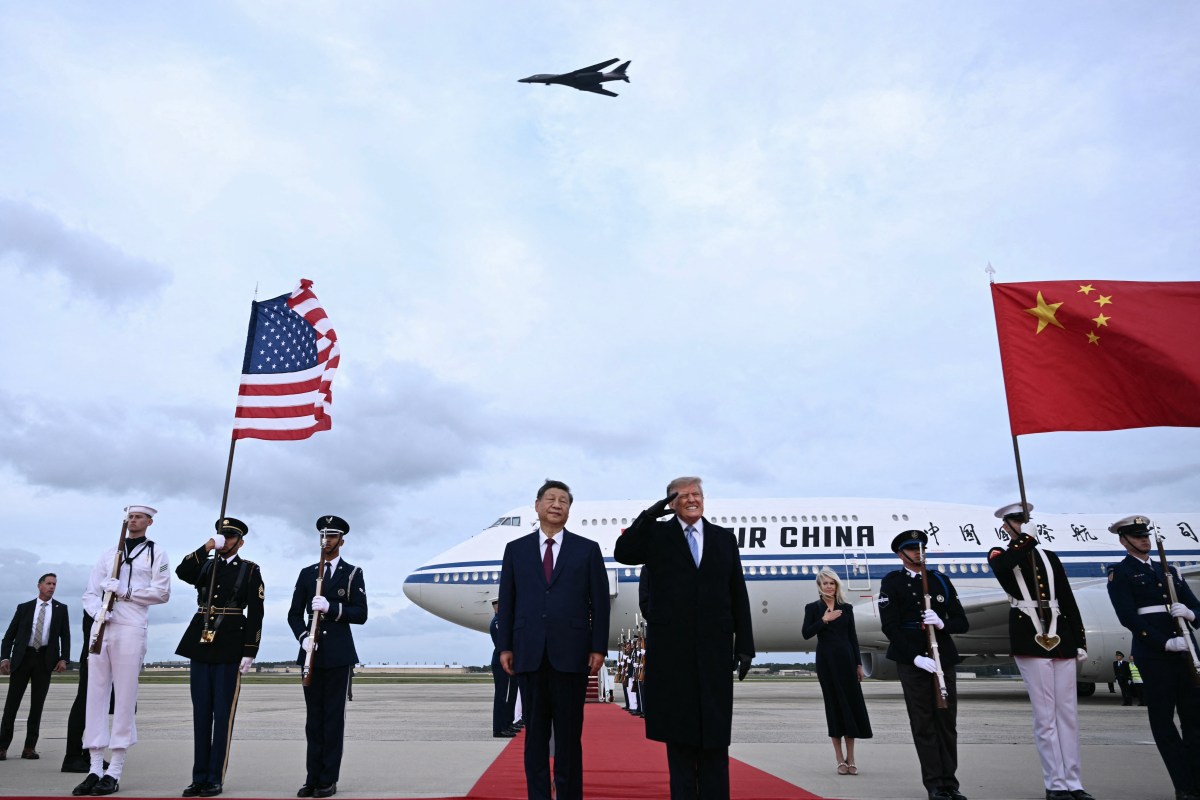
As President Donald Trump prepares for his second meeting this year with Chinese counterpart Xi Jinping, the summit on U.S. soil in some ways bears even higher stakes than their last encounter in Beijing. The heightened significance can at least partially be attributed to the shift witnessed in the two leaders' dynamic during their previous meeting in May. Trump's repeated expressions of praise for Xi surprised some observers amid expectations of a tougher turn given the U.S. president's record of raising pressure on China and his warnings to Beijing over its stance on the U.S.-Israeli war against Iran.
Ensuing developments threaten to further undermine Trump's hand. The conflict with Iran drags on with rising fuel costs, declining domestic support and no clear sign of victory as midterm elections approach, while questions over U.S. security commitments gain traction among both Middle Eastern partners and European allies of Washington. Whether or not the meeting fuels accusations of another "TACO" ("Trump Always Chickens Out") instance, Xi will likely have a say.
"For one thing, the U.S. does not have all the cards," Xu Qinduo, senior fellow at the Beijing-based Pangoal Institution, told Newsweek. "The fact is the Chinese side also has their own cards." One area in which China has already demonstrated the capacity to counter the U.S. effectively is on rare earth elements. China accounts for roughly 70 percent of global rare earth mining and around 90 percent of worldwide refining.
So, when Beijing retaliated against Washington's tariffs by restricting rare earth exports last year, the White House was forced to the table. Xu also pointed out that China's comparatively larger manufacturing capacity and economic weight in terms of purchasing power parity raised doubts as to whether "the U.S. is in a position to confront China head on." Meanwhile, there were opportunities abound for Xi to capitalize on concerns over the direction of U.S. foreign policy in the wake of the U.S. killing of Iranian Supreme Leader Ayatollah Ali Khamenei in late February and abduction of Venezuelan President Nicolás Maduro in early January. "By not launching a war or kidnapping or assassinating leaders of other nations, or imposing tariffs on the rest of the world, China is demonstrating what a responsible big power should look like," Xu said.
It's a concept perhaps most easily conveyed by the viral "Do nothing, win" meme that portrays Xi as repeatedly benefiting from the apparent missteps of others, much of the time those of Trump and his predecessor, former President Joe Biden, in social media discourse. But Miles Yu, director of the Hudson Institute's China Center who previously served as chief China strategist to former U.S. Secretary of State Mike Pompeo, saw a real U.S. effort to compel China to take action behind the pomp and circumstance surrounding their meeting.
"The ceremonial hoopla surrounding the summit reflects the lack of substantive breakthroughs since May, with both Washington and Beijing determined not to appear weak," Yu told Newsweek. "President Trump wants to use the reciprocal ceremonial extravaganza to show real American power with superior bombers and fighter jets," Yu said. "Xi wants to preserve and extend the trade truce, while Trump is pressing for implementation of Chinese commitments on rare earths, agricultural purchases, and meaningful market access for American companies." And he cautioned that "Trump’s personal praise of Xi should be distinguished from his administration’s tough policies and actions, which continue to use tariffs, sanctions, export controls, and law enforcement against Chinese entities," effectively putting the ball in Beijing's court.
Extract — continue reading at the source.