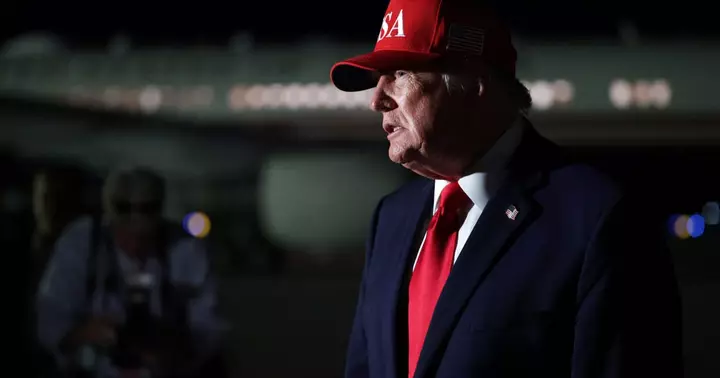
Almost a third of Americans say President Donald Trump’s $5,000 pledge makes them less likely to vote Republican, a new national poll shared exclusively with Newsweek has found. Trump has proposed a $5,000 payment to every adult American citizen if Republicans retain both chambers of Congress, presenting it as a dividend from the country’s economic success in an announcement at the inaugural Republican National Committee (RNC) midterm convention in Dallas earlier this month. But findings from a September Verasight poll, which was fielded among United States adults, suggest the offer is producing more resistance than enthusiasm, although they do not prove it has caused voters to change sides.
Younger adults and independents reported particularly negative reactions, while even most Republicans said the pledge would not affect their choice. "The clearest takeaway we see from the data is that the promise doesn’t appear to be an effective way to persuade voters," Verasight co-founder and CEO Ben Leff told Newsweek in emailed comments. He added: "Politicians should take this as a clear sign that putting a dollar figure in front of voters does not translate into political support." White House spokesman Davis Ingle told Newsweek previously that the 2024 election was the "ultimate poll," arguing that nearly 80 million Americans backed Trump’s agenda.
Ingle added that the president had made "historic progress" on jobs, inflation and housing affordability, with further effects still to come. Newsweek contacted the White House press office and the RNC via email for further comment on Friday morning. The Verasight survey found 33 percent of Americans said Trump’s $5,000 pledge makes them less likely to vote Republican, against 15 percent who say more likely.
And 52 percent said the pledge would make no difference to their vote. It points to a basic difficulty for the president’s pitch: most Americans say the $5,000 promise would not affect their vote, while those who might be influenced are more likely to turn away from Republicans than support them. Twice as many respondents selected "less likely" as "more likely." Leff said: "The broader picture is that most voters are not being won over by the promise, and among those who say it does affect them, the reaction is more negative than positive." Still, the wording measures how people describe their reaction to the proposal, not an observed shift in voting intention.
Some respondents may be expressing opinions of Trump or the Republican Party that they already held. "We need to be careful about interpreting this as 33 percent of Americans actually changing their vote because of this promise," Leff said. "Disliking a proposal and actually changing your vote because of it are two very different things." Adults aged 18 to 29 produced the sharpest negative result: 41 percent said the pledge makes them less likely to vote Republican, while 19 percent say more likely.
Independents divided 31 percent less likely to 12 percent more likely. Leff cautioned against assigning motives that the survey did not test, but said the figures indicate that a one-time payment alone is not moving either group toward the GOP. Those findings are worth noting because a campaign offer has persuasive value only if it can reach beyond voters already inclined to support the party making it.
Extract — continue reading at the source.