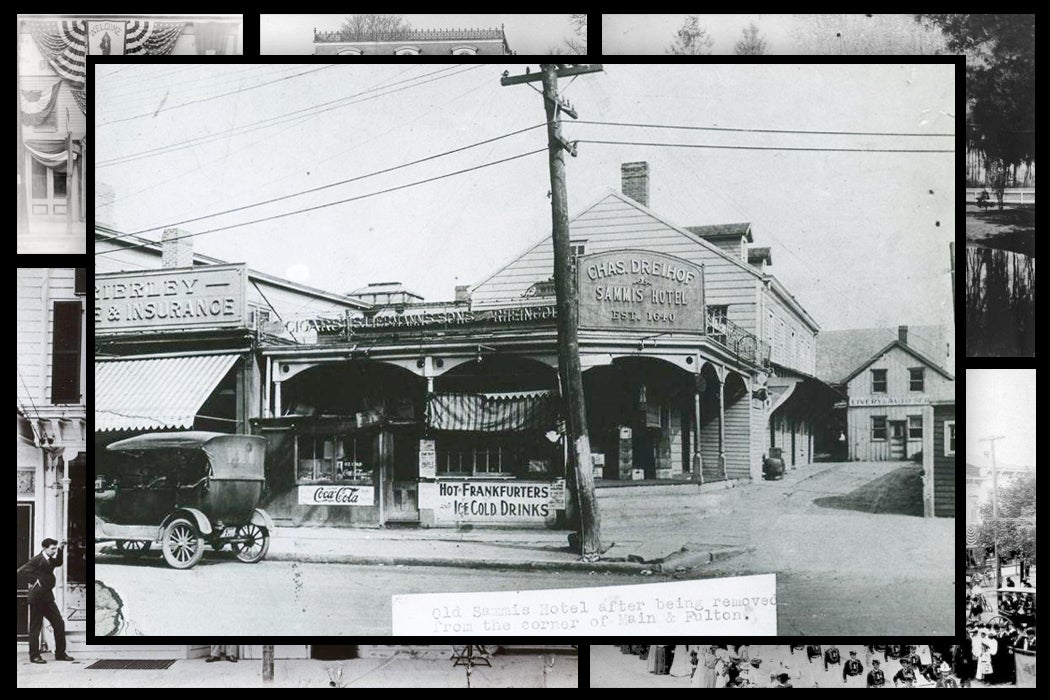
Much of the urban landscape across the United States today was shaped by rapid development after World War II. The few decades that followed saw a massive development of suburbs, highways, and later, shopping malls. But what did the American landscape look like before the war?
What was small-town life like then? A look at the history of Hempstead Village, New York, provides a glimpse of that period. Hempstead Village on Long Island was founded in the mid-1600s during the period of colonization.
Although the area was initially under Dutch colonial control, two Englishmen, John Carman and John Fordham, purchased land there in 1643 to establish a new community. Carman and Fordham negotiated with local Indigenous tribes living on Long Island to purchase the land, and the following year, families moved there to start their new community. In a lecture to the Long Island Historical Society in 1943, Dr.
Hall explained how Hempstead got its name. Speaking about the village’s history for its tercentenary celebration, Hall stated that the new community’s name “was derived from the birthplace of John Carman, one of the original patentees, in Hertfordshire—a place called Hemel-Hempstead. Carman’s fellow purchaser, Fordham, was born only eighteen miles from that place.” Like many places in former colonial territories, Hempstead’s name refers back to the homeland of those who colonized and settled in the region.
Despite their long histories, Hempstead Village and its neighbors in Nassau County remained largely rural communities until the twentieth century. When New York City annexed Queens County to form the Borough of Queens on January 1, 1898, the smaller rural communities involved, including Hempstead, were not pleased about becoming part of New York City. Nassau County was established one year later on January 1, 1899, allowing these rural communities to maintain their independence from their metropolitan neighbor.
Images from Hofstra University’s Hempstead, New York Photographs collection, shared via JSTOR, document Hempstead during this period and the decades that followed, offering a visual record of the village’s downtown businesses, homes, civic buildings, and community life. It was Hempstead’s railroad connections that helped keep its economy active and the community connected before automobile travel became widespread. As Arnold Silverman and Linda Schneider explain in their research on Long Island’s suburbanism, “[b]efore the development of paved roads and widespread automobile ownership, railroad communities such as Hempstead (a nascent city despite the legal designation of village) served as the focal point of commercial, political, and cultural life in Nassau’s south shore.” A vast network of transcontinental and regional rail lines across the United States got people where they needed to go, and having a busy train station was a real asset to a place like Hempstead Village.
Extract — continue reading at the source.