When the pain first arrived, it was during an uncharacteristically temperate Chicago summer more than a decade ago. First as a slight tingling in my right jaw, barely noticeable, which I could basically ignore as I walked past the red-bricked town homes of Hyde Park while spending a summer seminar at the University of Chicago. Only in the morning after the first day that I noticed this sensation in my teeth which I couldn’t quite localize did the real pain commence.
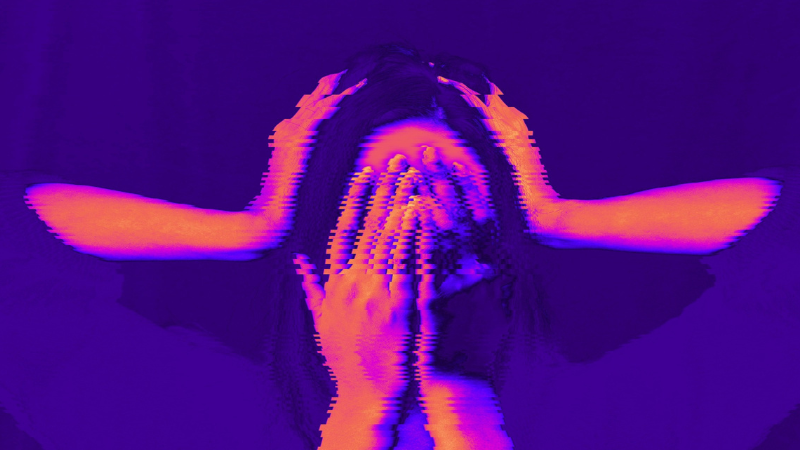
Awakened by the crushing, burning agony that now radiated along each one of my upper and lower lateral incisors, canines, and molars, it felt to me as if someone had heated an iron rod and pierced the flesh on my neck just behind my ear and pushed it through my jaw until it burst out through my right cheek. That image was one that’s come to me in subsequent years, but during the pain itself, there was no imagination or metaphor, only the piercing, heightened, exemplary feeling itself which had expanded to obliterate all other concerns. For around 36 sleepless hours, I slathered thick, viscous glops of Benzidine on my teeth and gums, erroneously assuming that the origin of the pain was dental.
If I’d been a character from Kevin Brockmeir’s novel The Illumination, wherein some mysterious, supernatural shift in the universe suddenly rendered everyone’s pain visible as a kind of bright glow, then at this moment my head would have been awash with blinding light. Without dental insurance my anguished mind didn’t just assume, but accepted, that the pain would be never-ending, that is until on the second day I came out of my exhausted and lingering half-sleep to find that at some point near the dawn the uninvited guest had simply left, at which point—lacking the language to encompass what it had felt like—I largely forgot the feeling. That is until it would return.
We grasp towards our meager and incomplete descriptions of ineffable pain, we inevitably fall short, and yet like anything our words still serve us, even if only as a half-measure. Scarry’s book remains the greatest theoretical treatment of the unintelligible experience of pain; not its physical symptoms or its biological etiology, but the actual subjective feeling, for she writes that pain “does not simply resist language but actively destroys it.” That sentiment, I believe, is universal. Is your pain burning or aching, throbbing or cutting, stabbing or radiating?
Pain makes poor poets out of all of us, as we madly gesture towards whatever inadequate metaphors should serve in the moment in an attempt to convey severity to anyone who might be equipped to help. Just think of the anemic Numerical Rating Scale for patients to rank their pain from 1-10, as if the suffering were giving Rolling Stone magazine album evaluations, or the Wong-Baker FACES Scale whereby the afflicted match their agony to abstracted faces ranging from a beaming and unconcerned cartoon through to a grimacing and afflicted individual, with discrete iterations in that great in-between from best to worst. How can one easily impress upon others George Orwell’s observation from Nineteen Eighty-Four that “nothing was so bad in the world as physical pain” if you haven’t been to Room 101 yourself?
Has anyone ever found that the picture of the little frowning man is ever commensurate with the feeling of an iron rod being jabbed through your head? Such methods speak not to a failure of medicine, but rather the far larger failure of language. So exemplary is the experience of pain, whether it be the bubbling itch of a sunburn or the sick slick slice of a paper cut, that the tools of description naturally flounder when faced with the singularity of such sensations.
Extract — continue reading at the source.