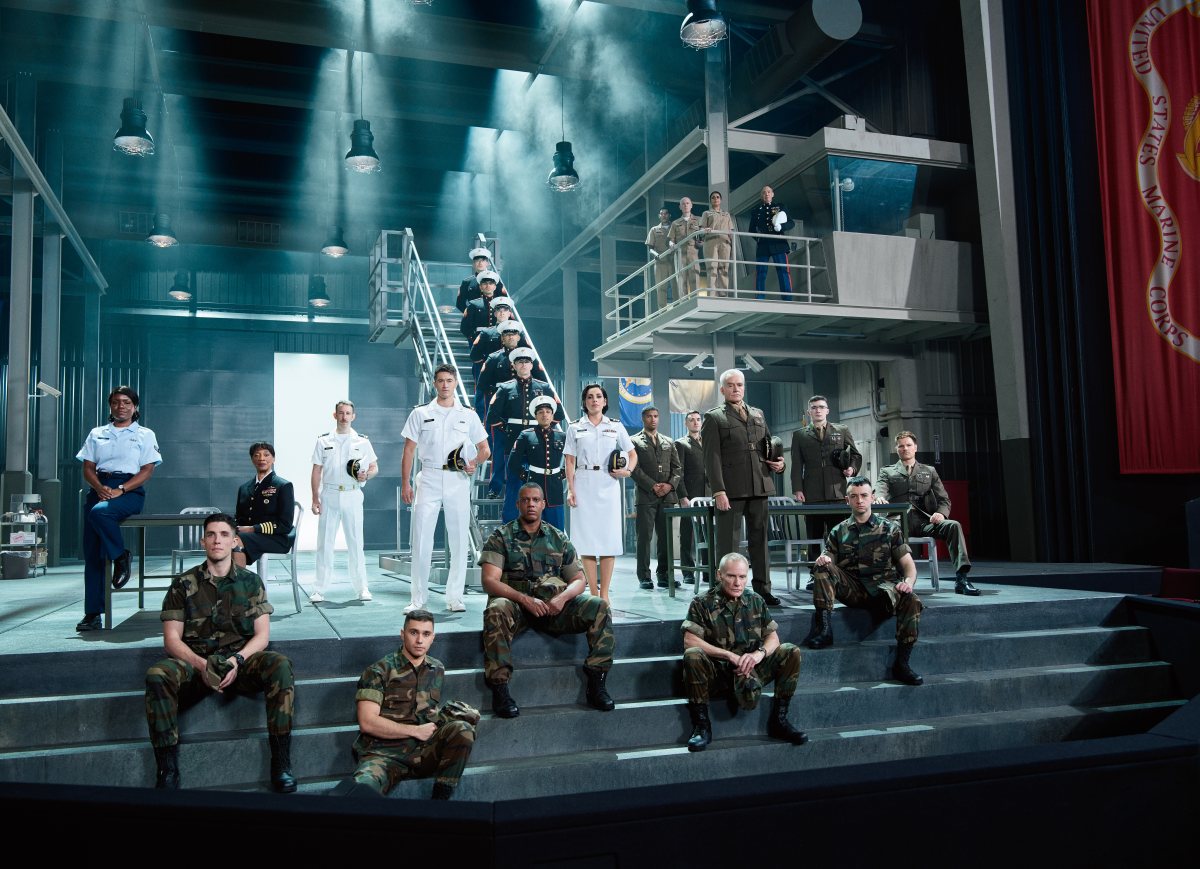
Colonel Nathan Jessep takes the witness stand in A Few Good Men with the self-assurance of a man who has spent his life being obeyed. He regards the young Navy lawyer questioning him with something approaching contempt. After all, Jessep has commanded Marines, defended his country and made decisions that other men lack the stomach to contemplate and, this insolent lieutenant expects him to explain himself.
It is the climactic confrontation in Aaron Sorkin's military courtroom drama and its return to Broadway raises a wistful question When did America last have villains this impressive? In Michael Arden's revival at Lincoln Center, Bradley Whitford plays Jessep opposite Tom Blyth's Lieutenant Daniel Kaffee. The production, which opens on October 29, returns Sorkin's 1989 play to the stage at a moment when its vision of American authority can feel almost impossibly remote.
There is something seductive about Jessep's command of language and his absolute conviction that duty demands sacrifice. He is arrogant and ultimately culpable, yet belongs to a world in which even the bad guys seem to possess qualities Americans might wish their leaders still had—competence, seriousness and a sense of obligation to something that is beyond themselves. The peculiar nostalgia of A Few Good Men is that a play written to expose the failures of American authority now makes us long for an era when even the men who abused that authority seemed worthy of being taken seriously.
Jessep is the perfect example. He is a dangerous man who has built a moral world in which the demands of national security excuse cruelty and the authority of command places him beyond ordinary judgment. His subordinates have learned that obedience matters more than conscience, a fact that leads to the death of a young Marine.
When lawyers enter the base to investigate said death, Jessep treats them like children who cannot begin to comprehend the burdens he carries. What makes Jessep so compelling is that his corruption grows out of qualities that might, under different circumstances, have made him admirable. He has devoted his life to an institution he considers greater than himself.
He also believes the protection of his country requires extraordinary sacrifice and he has accepted a share of that burden. His fatal error is to believe that sacrifice entitles him to decide which rules apply to him. There is something almost Shakespearean about a man whose virtues have curdled into vices.
Extract — continue reading at the source.