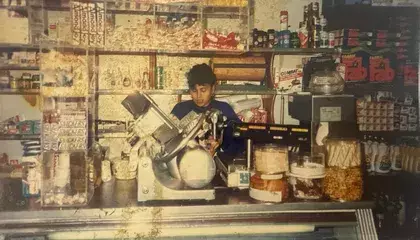
As morning light fills New York City’s crevices, residents shuffle into their closest bodega, lining up for a fresh cup of coffee and a hot breakfast sandwich. These are only the first of hundreds of customers the bodeguero will serve throughout the day. Offering everything from hot chicharrones and fresh plátanos to toothbrushes and toilet paper, bodegas are the caulk of city life—corner stores stuffed to the brim, filling the gaps between visits to the butcher, the bakery and other specialty shops.
But their importance extends beyond being general stores: Bodegas are neighborhood hubs, crucial resources for Latino immigrants as they navigate life in a new country. They “serve a purpose that’s a lot more than just giving people ingredients,” says Tey Marianna Nunn, associate director of content and interpretation for the Smithsonian’s National Museum of the American Latino. These local, family-run shops carried daily essentials and premium goods, often imported from Spain, like olives and sardines.
For new immigrants from Spanish-speaking countries coming to the United States in search of greater economic prosperity, opening and working in bodegas was tough but steady, and it offered a taste of home. After Puerto Ricans gained U.S. citizenship in 1917, many migrated to New York City and brought their bodegas, Nunn says. Early iterations of the stores offered Puerto Rican staples, such as cilantro and its cousin culantro.
Puerto Ricans came to New York in even larger numbers during the mid-20th century. These bodegas also functioned as spaces to gather, where migrants could navigate this new world in the comfort of their native language. Customers would stop in, grab groceries and chat while helping each other find jobs, new apartments and other necessities, Nunn says.
And as people pass by, you start building a community and building a neighborhood.” Quick fact: How many bodegas are there in New York City? A food policy plan first issued in 2021 tallied about 14,000 bodegas and grocery stores in the city. Other city estimates have counted around 7,000 bodegas alone.
When those first few waves of immigrants left New York and fanned out across the country, they took these small stores—and the Latin American delicacies they carried—with them. While these stores may have different names—tienditas, papi stores or minimercados—they serve the same purpose as New York City bodegas, connecting immigrants to each other through food, culture and community. In her new book, Bodega Stories, journalist and writer Amaris Castillo speaks to the people at the heart of these Latin American corner stores.
Extract — continue reading at the source.