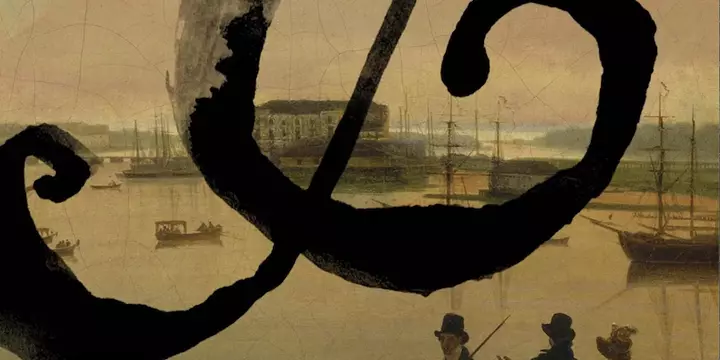
If we’re asked to picture a scientist at work, it’s tempting to reach for an old stand-by: the astronomer at the eyepiece of an enormous telescope, or the chemist surrounded by test tubes. Even more entrenched, perhaps, is the notion that science advances by a chain of “aha” moments, sparking one earth-shattering breakthrough after another: Think of Einstein figuring out that E=mc 2, perhaps, or Marie and Pierre Curie discovering radium. In “Lost in Curiosity: Field Notes From Scientists’ Adventures Into the Unknown,” science writer Roberta Kwok sets out to smash those stereotypes, largely by taking us inside the everyday world of science and scientists, in all its painstaking monotony.
Yes, breakthroughs may happen — but they are not, by any stretch, the norm.“‘Eureka!’ means ‘I have found it!’” Kwok writes early in the book, “but a more fitting motto for science might be ‘I can’t find it,’ ‘Where is it?’ or, most often, ‘What the hell is going on?” BOOK REVIEW**—** “Lost in Curiosity: Field Notes from Scientists’ Adventures into the Unknown,” by Roberta Kwok (Sourcebooks, 368 pages). In some cases, just getting to where the science is supposed to be happening is a challenge. Early in the book, we follow along as Kwok learns about the work of Jessica Mejia, a postdoctoral researcher in glaciology at the University at Buffalo and one of a group of researchers planning an excursion to Helheim Glacier on Greenland, to study how water flows underneath thick sheets of ice.
There are no planes, trains, or buses that one can take to the team’s research site, located some 65 miles inland, nor any roads. Helicopter is the only way in or out, and the team has just learned that the helicopter would not be available when they need it. They’re also worried about the weather taking a turn, as it did back in 2018, when the team was stuck in town, waiting for conditions to improve so the chopper could fly.
The previous year, a snowstorm forced them to stay in their tents for several days — and their current field work was delayed by the Covid-19 pandemic. Helheim Glacier is more than just a massive block of ice. Kwok relates how researchers in 2011 struck water while drilling for an ice core — evidence of a giant aquifer hidden beneath the ice.
Later measurements showed that Greenland’s aquifers cover an area about the size of Massachusetts. Knowing how the ice (and any water beneath it) behaves can provide insights into the effects of global warming, particularly the impact of sea level rise. > In some cases, just getting to where the science is supposed to be happening is a challenge. Another chapter finds Kwok getting to know a poorly understood species known as the smooth guardian frog.
The location — a rainforest in Borneo — again presents difficulties, though the real challenge here is trying to figure out why these tiny frogs do what they do. The females vocalize in response to a male frog’s call — which is unusual. Johana Goyes Vallejos, a Ph.D. student in ecology and evolutionary biology at the University of Connecticut, wonders if these frogs represent a case of sex-role reversal, in which females compete for males, with males taking on child-rearing duties.
Extract — continue reading at the source.