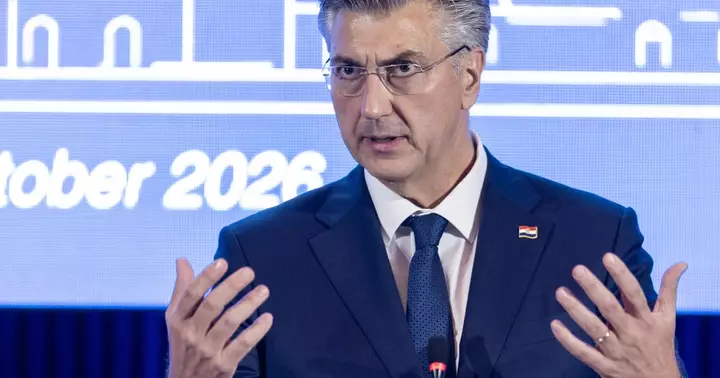
Ahead of a debate on enlargement among EU leaders at Thursday’s summit, Croatia — which joined the bloc in 2013 — is among the countries raising concerns about Montenegro’s accession bid. Speaking to POLITICO at a pre-summit meeting of the European People’s Party, Croatian Prime Minister Andrej Plenković said Zagreb had been “extremely constructive” but pointed to unresolved issues under negotiating Chapter 23 (Judiciary and Fundamental Rights) and Chapter 31 (Foreign, Security and Defence Policy), some of which date back decades. Several of the unresolved issues stem from Montenegro’s involvement in the military aggression against Croatia in the 1990s, including attacks on Dubrovnik and the occupation of parts of Croatian territory, according to the document.
Among Zagreb’s demands is compensation for Croatian nationals detained at the Morinj camp, where more than 300 Croatians were held between October 1991 and August 1992, following the occupation of part of the Dubrovnik region by Serbian and Montenegrin forces. Croatia is also calling for the preservation and permanent display of a memorial plaque at the former detention camp, as well as the renaming of a municipal swimming pool in Kotor dedicated to Zoran Gopčević, a former international water polo player who, according to the document, served as a guard at Morinj in 1991 and 1992. Other outstanding demands include the prosecution of war crimes committed during Croatia’s War of Independence and further talks on the delimitation of the border between the two countries.
Despite those disputes, Croatia has so far consented to Montenegro’s progress in accession negotiations. The country has provisionally closed 21 of its 33 negotiating chapters, making it the frontrunner in the EU’s enlargement process.
Extract — continue reading at the source.