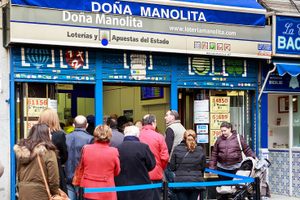
This modest lottery shop draws hopefuls all year long, but come Christmas season, lines wrap around the block. People waiting in line to buy lottery tickets Xavixavir / Atlas Obscura User People waiting in line to buy lottery tickets Xavixavir / Atlas Obscura User People waiting in line to buy lottery tickets Xavixavir / Atlas Obscura User People waiting in line to buy lottery tickets Xavixavir / Atlas Obscura User Few phenomena can reliably unite the notoriously fragmented population of Spain, but the obsession with _El Gordo_—the nation’s historic Christmas lottery—is unquestionably one of them. At the heart of this annual ritual of collective hope stands a single legendary shop in the capital, whose origins trace back to a remarkably ambitious young woman.
In 1904, a 25-year-old woman named Manuela de Pablo opened a modest lottery stand on Madrid’s Calle San Bernardo. Known affectionately as Doña Manolita, she began selling ticket fractions primarily to students from the nearby university, embarking on a venture that would redefine Spanish urban folklore. Her early setup was deceptively simple: a wooden counter, a notebook, and a reputation forged through personal warmth and steadfast reliability.
In a rapidly modernizing city, she offered far more than tickets—she provided confidential advice and friendly conversation, personifying good fortune itself while building a loyalty that would endure for generations. As her myth grew alongside her reputation for dispensing grand prizes, so did her establishment's footprint. In 1931, the shop moved to the bustling Gran Vía, anchoring itself there for eight decades before relocating in 2011 to its present home on Calle del Carmen 22, just steps from the vibrant Calle Preciados.
Today, that century-old legacy manifests as a striking spectacle. Every holiday season, colossal queues stretch down the surrounding streets as hopeful pilgrims travel from across the country, enduring hours in the cold just to purchase a slice of luck from Madrid’s ultimate temple of chance. Get more unusual and extraordinary places each week with the Atlas Obscura Places newsletter.
Your newsletter subscriptions with us are subject to Atlas Obscura's Privacy Policy and Terms of Use. A Prohibition-era casino once hidden as a palatial tea room. This statue is said to bring good luck to visiting lovebirds.
The twice-stolen hand of an alleged card cheat, with its final set of playing cards. First established in 741, this is one of the oldest Taoist temples in China. A bizarre object of worship believed to grant wishes to those who tie it up with a rope.
Extract — continue reading at the source.