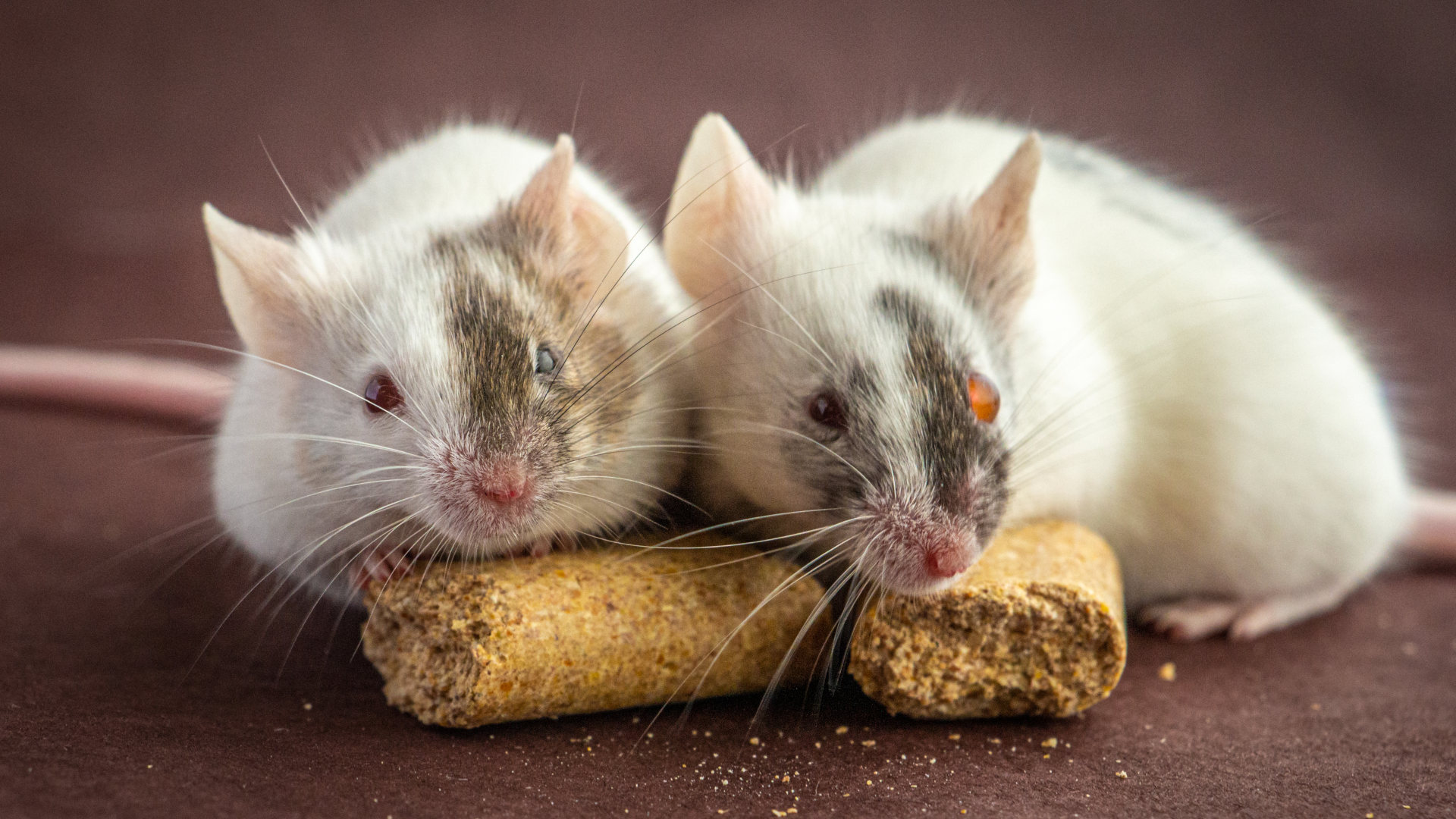
I n 2010, scientists at the University of Tokyo and other institutions reported a startling achievement: They had successfully grown a pancreas made almost entirely of rat cells within the bodies of mice. The research was directed by Hiromitsu Nakauchi, a physician-scientist who also holds an academic appointment at Stanford University. Nakauchi specializes in developing “chimeric” animals made up of cells from different species.
This unprecedented feat proved that an entire organ from one kind of animal can be grown within another. The chimeras had been generated as early-stage embryos that, after being implanted into surrogate mothers, came to term “just as in normal mouse pregnancy,” Nakauchi wrote in an emailed response to questions. Nakauchi’s Japanese lab, now at the Institute of Science Tokyo, a public research university, hit another milestone this year by producing litters of baby mice that were partly human.
Currently under review at the journal Nature Biomedical Engineering, the experiment is the first instance of pregnancies involving human-animal chimeras resulting in live births. The human cells were integrated with the animals’ blood vessels and heart muscles, showing a capacity to grow in a species that diverged from ours some tens of millions of years ago. Scientists in the field argue that human-animal chimeras will provide crucial insights into human diseases.
They might, for example, reveal early changes in Alzheimer’s and Parkinson’s that standard animal models can miss. Ideally, human-animal chimeras could help to meet the relentless demand for transplantable organs. About 100,000 people in the United States are currently on the national organ transplant waiting list, and an estimated 5,600 die every year before they can receive a transplant.
Labs around the world are now performing chimeric experiments with pigs, sheep, and monkeys in addition to rodents —all with the goal of generating organs, blood, and other tissues that are as human as possible. But the research also raises problems for animal rights, along with ethical concerns and worries that lab-generated creatures might develop greater self-awareness or even produce human reproductive cells. The notion of a chimeric animal with human brain tissue “creeps people out,” said David Prentice, a cell and developmental biologist with Science Alliance for Life and Technology, a nonprofit research and policy organization that counts stopping experiments using human embryos among its goals.
Prentice raises the specter of experiments creating hybrids like those in H.G. Wells’ novel, “The Island of Doctor Moreau,” that “make humans less so, or the animals more like humans.” While Prentice is not against the creation of human-animal chimeras generally, he and other critics have pushed for restrictions on the co-mingling of human and animal life, which has been framed by some as a stain on the dignity of animals and humans alike. A wide constituency of advocates and lawmakers have voiced concerns over chimeric investigations.
Extract — continue reading at the source.