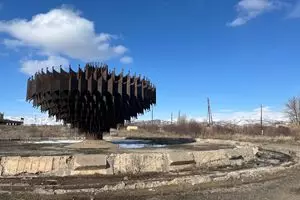
It's a massive, rusted fountain that survived an earthquake in 1988. If you go there in late February, the gray sky matches the mood perfectly. You walk down the cracked concrete of what used to be a grand Soviet boulevard, passing decaying apartment blocks.
Just behind some overgrown bushes which look like a makeshift camp. The scale of it is incredibly imposing. Designed by architect Artur Tarkhanyan in 1982.
In 1988, a devastating earthquake leveled most of Gyumri. The surrounding buildings crumbled to dust, but the fountain stubbornly survived. Its plumbing was permanently destroyed, and it never sprayed water again.
Today, it just stands there, completely dry and rusting in the wind. But when you stand under it, you realize it is not just a forgotten piece of scrap metal. It feels like a genuine, accidental monument.
It gives you a very raw, melancholic glimpse of what Gyumri was before the disaster, and what the city was supposed to become. If you appreciate unfiltered history and that specific, quiet post-Soviet atmosphere, this place is absolutely worth the detour. Get more unusual and extraordinary places each week with the Atlas Obscura Places newsletter.
Your newsletter subscriptions with us are subject to Atlas Obscura's Privacy Policy and Terms of Use. The oldest institution of higher education in Wisconsin and the first to admit women. Overlooking beautiful Rhossili Bay are the remnants of a former World War II radar station.
Extract — continue reading at the source.
/https://tf-cmsv2-smithsonianmag-media.s3.amazonaws.com/filer_public/f6/88/f6886882-f686-48da-bc69-05564283b2ec/damaris_castillo_at_a_bodega.jpg)