The forensics-heavy CBS crime procedural CSI: Crime Scene Investigation may have gotten a bad rap. After its premiere, prosecutors started complaining about the “CSI effect”—jurors demanding scientific evidence like DNA analysis in trials when none was available or appropriate. A 2008 survey of more than 2,000 jurors found that they were, in fact, increasingly more likely to expect lab-grade evidence from the state, but that the phenomenon wasn’t linked to their TV viewing habits.
Instead, it seems like the jurors were generally more aware of scientific advancements in the field of forensics. Sara Gordon, a law professor from the University of British Columbia, recently published a trio of deep dives into a few common techniques—which often go unquestioned by judges—and found them quite lacking. Read more: “How Does Blood Splatter in Space?” Consider blood pattern analysis (BPA) for example.
While it has the trappings of a scientific field that draws on physics, mathematics, and fluid dynamics, the genesis of modern blood pattern analysis lies in the experimentation of a Corning Glass Works chemist working in his basement (which he named the “The Laboratory of Forensic Science”). That doesn’t necessarily mean it’s not a legitimate mode of scientific inquiry, but a comprehensive 2009 report from the National Academy of Sciences found that “the uncertainties associated with bloodstain pattern analysis are enormous.” It also concluded that the opinions of BPA experts—who Gordon notes aren’t subject to any peer or technical review—tend to be “more subjective than scientific.” One study asking BPA experts to analyze 400 drops on rigid surfaces found they were correct less than 70 percent of the time, a figure that dropped to 62 percent for absorbent fabrics. And because BPA often contains an emotional element, purporting to speak to the mindset and motive of defendants, shoddy analysis can lead to more punitive sentences.
For example, a 2023 report by a company that offers proficiency tests to firearms analyzed the responses from 280 experts and found they committed misidentifications around 37 percent of the time when the bullets were damaged or poorly marked. Of course, the least scientific forensic investigation is one that’s conducted by those working outside of a laboratory—by drug-sniffing dogs. An Australian study found that no drugs were discovered after nearly 75 percent of positive reports from canine “investigators.” According to Gordon, dogs might give a false positive because of poor training, residual odors, or in response to subtle cues from their handlers. (It’s no wonder many canine unit officers joke that their drug-sniffing dogs are “probable cause on four legs.”) “They’re not nearly as reliable as many courts seem to assume,” Gordon said.
And that’s the problem Gordon is focused on. Clearer standards for training, certification, and performance monitoring (for humans and dogs) can go a long way, but ultimately judges need to decide what evidence passes scientific muster. Subscribe to our free newsletter.
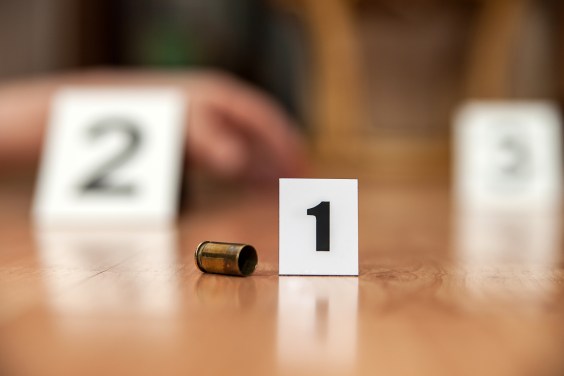
Lead Image: Arkadiusz Fajer /
Extract — continue reading at the source.