Vauhini Vara, who has for years been investigating the impact of AI on writing, published a piece in The Atlantic over the weekend claiming that the winner of The Caine Prize used AI to write his story. Zimbabwean writer Simbarashe Steyn Kundizeza won the 2026 Prize for his story “The Blue Fighter,” which was published last year in The Shallow Tales Review. This is the third time this year a major literary prize has been tainted by AI accusations: the Commonwealth Prize and the Prix Goncourt have also contended with issues around inhuman tools being used to generate text.
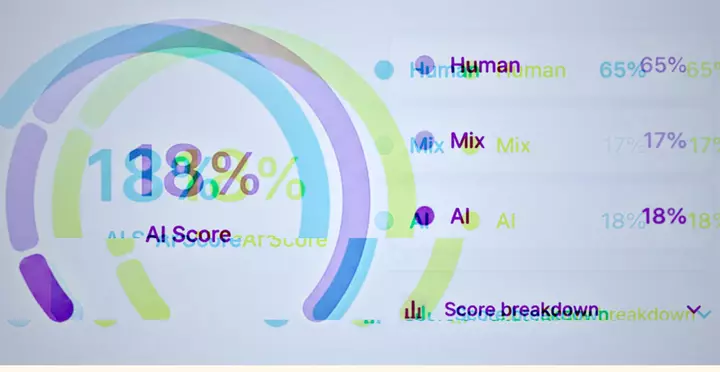
Vara made her discovery after putting “The Blue Fighter,” along with all previous Caine Prize winners and other writing of Kundizeza’s, into an AI-detection program called Pangram, which “flag[ged] almost the entire story as AI-generated.” The Caine Prize team has responded and are looking into the allegations, but will be taking a more human approach without using software tools. Ellah Wakatama, the chair of the Caine Prize’s board of trustees, told Vara: “My stance, as the person who leads the prize, is that if there is such an accusation, I want proof that does not come from a machine.” She said she planned to approach Kundizeza with “compassion” and the presumption of honesty. Wakatama is also Zimbabwean.
The Caine Prize is “the foremost international literary prize for a short story by an African author,” and aims to celebrate writers both in Africa and the diaspora. Not to say that Vara is working in bad faith, but there is an ugly history of bad actors seizing on these kinds of accusations against writers of color. One example is unfolding right now in France, where the Haitian-born Canadian novelist Thélyson Orélien has been accused of using AI in his new novel.
Orélien has firmly denied the accusations, but the controversy was quickly pounced on by the far right to discredit the non-white writer. Whether or not the accusations are true, they’re already having an impact: Orélien was dropped from the longlist for the Prix Goncourt and left France in the middle of his book tour. (The controversy also boosted his sales though, so that might be a silver lining.) Even if you could find something interesting in this tech and its uses, the ugly complication is that too many AI boosters are also rich and powerful, and uninterested in compromise. Another issue is that AI detectors are still not terribly reliable, which Vara addresses in her piece, citing a number of studies to bolster the credentials of Pangram.
But these tools have been shown to be particularly spotty when it comes to writing from outside writing’s dominant, white and Western culture. A Stanford study found that these detectors are particularly bad with non-native English writing, for example: While the detectors were “near-perfect” in evaluating essays written by U.S.-born eighth-graders, they classified more than half of TOEFL essays (61.22%) written by non-native English students as AI-generated (TOEFL is an acronym for the Test of English as a Foreign Language). According to the study, all seven AI detectors unanimously identified 18 of the 91 TOEFL student essays (19%) as AI-generated and a remarkable 89 of the 91 TOEFL essays (97%) were flagged by at least one of the detectors.
AI has long been known to have racial and cultural blindspots. For years people have been raising the alarm about facial recognition software—popular amongst cops and militaries—being unable to detect dark-skinned faces, for example. As a result, The Caine Prize’s investigation into the claims against Kundizeza will be a “human-centred approach ensuring that writers are supported and cared for during the process.” I think it’s the right call.
Extract — continue reading at the source.