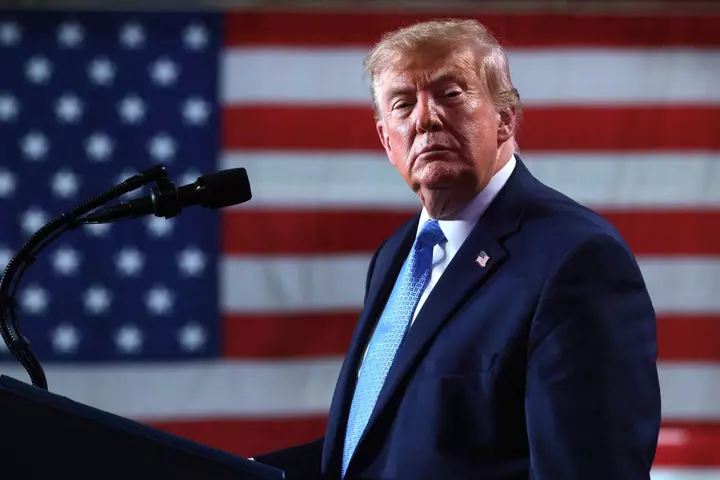
President Donald Trump unquestionably remains the dominant figure in the Republican Party, wielding significant influence over who represents it and the policies it pursues. In the lead-up to the 2026 midterms, he played an active role in handing out coveted endorsements to Republican candidates in primaries and general elections. But as Democrats swept into control of both the Senate and the House this week, including winning several high-profile races involving Trump-backed Republicans, questions have emerged over how much an endorsement from the president counts.
In the 2026 elections, Trump issued the most endorsements of any election cycle since he first took office. He offered 315 Republican primary endorsements, with a 96 percent success rate, according to Ballotpedia. That is broadly in line with his record in previous cycles.
His primary success rate has remained above 90 percent in every midterm and presidential election year since 2018. Trump endorsed 330 candidates in the 2026 general elections, with a 73 percent success rate so far, with some results still outstanding. His previous record in general elections was less consistent, ranging from 59 percent success in 2018 to 89 percent in 2024.
The gap between the success of his primary and general election endorsed candidates is notable but not particularly surprising. Costas Panagopoulos, a professor in Northeastern University’s department of political science, told Newsweek in a preelection phone call that endorsements are typically more influential in primaries. In general elections, party identification tends to play a greater role in who voters cast their ballots for, Panagopoulos noted, and voters can also generally expect the president to have endorsed candidates from his own party.
A candidate’s success also depends on their individual popularity, the strength of their opponent, and the political landscape in which they are running—a number of factors other than the president’s endorsement. Trump's endorsement remains hugely influential in deciding who wins a primary and gets to represent his party in general elections, but its impact is less apparent with the wider electorate. His involvement may also become a liability when he throws his support behind primary candidates who ultimately prove to be unpopular among the general voting public, or when the electorate is motivated by opposing Trump directly.
According to CBS News exit polls, 78 percent of voters who backed Democrats in House races said they voted to oppose Trump, compared with 36 percent of Republican voters who said they were voting to back the president. Kyle Kondik, managing editor of Sabato's Crystal Ball at the University of Virginia Center for Politics, told Newsweek before the election that Trump's influence over individual races was “probably” waning. Democrats have flipped seven Senate seats, with two seats yet to be declared.
Extract — continue reading at the source.
