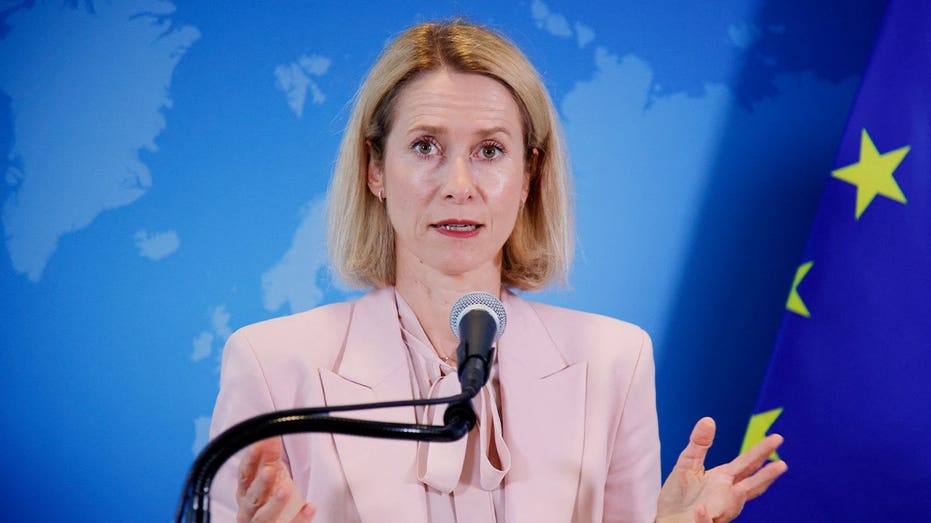
NEW YORK — Russia is trying to scare Europe into backing off its defense in the region, claims European Union’s top diplomat Kaja Kallas, who warns it will only lead to Moscow becoming more aggressive if it succeeds. "Their goal is to intimidate us from not supporting Ukraine, from refraining to support them and pressuring Russia," Kallas told Fox News Digital in an interview on the sidelines of the U.N. "What is important for us is that we are not afraid," she continued.
"Because otherwise this kind of intimidation actually pays off, and then we will see more of it across the world." For Kallas, Russia’s attempts to intimidate its European neighbors carry a history that reaches well beyond the war in Ukraine. Her mother, Kristi, was just six months old in 1949 when Soviet authorities deported her — along with her mother and her grandmother — to Siberia during Stalin’s mass deportations from the Baltic states. Kallas’ maternal grandfather was separately sent to a Siberian prison camp.
Kallas has recounted how her mother was transported east in a cattle car, with fellow deportees drying the infant’s diapers against their own bodies during the freezing journey. The family spent roughly a decade in Siberia before they were allowed to return to Soviet-occupied Estonia in 1959. Kallas was born in Tallinn in 1977 and spent the first 14 years of her life under Soviet rule.
Estonia restored its independence in 1991 as the Soviet Union collapsed. FRONTLINE NATO ALLY SHARES SHOCKING TAKE ON RUSSIAN INVASION THREAT Her family would go on to become deeply entwined with the new democratic Estonia. Her father, Siim Kallas, became the first president of the Bank of Estonia after gaining its independence, later serving as foreign minister and prime minister before moving to Brussels as a European commissioner.
Kaja Kallas followed her own path from lawyer to member of Estonia’s parliament and then the European Parliament. In 2021, she became Estonia’s first female prime minister and three years later was chosen as the European Union’s high representative for foreign affairs and security policy. It was a historic moment — putting a politician who grew up under Soviet occupation at the center of Europe’s response to Russian aggression on the continent.
That history has made Kallas one of Europe’s most prominent voices on Moscow — even as officials in her native Estonia and elsewhere along NATO’s eastern flank now caution against interpreting Russia’s recent provocations as preparations for a conventional invasion. Russia invaded Ukraine more than four-and-a-half years ago and shows no signs of backing off despite repeated promises that negotiations for an end of war are ongoing. Asked whether she agreed with Estonian and other Baltic officials who say they do not currently see Russia preparing for such an attack, Kallas instead pointed to Moscow’s growing use of sabotage and the importance of deterrence.
Extract — continue reading at the source.