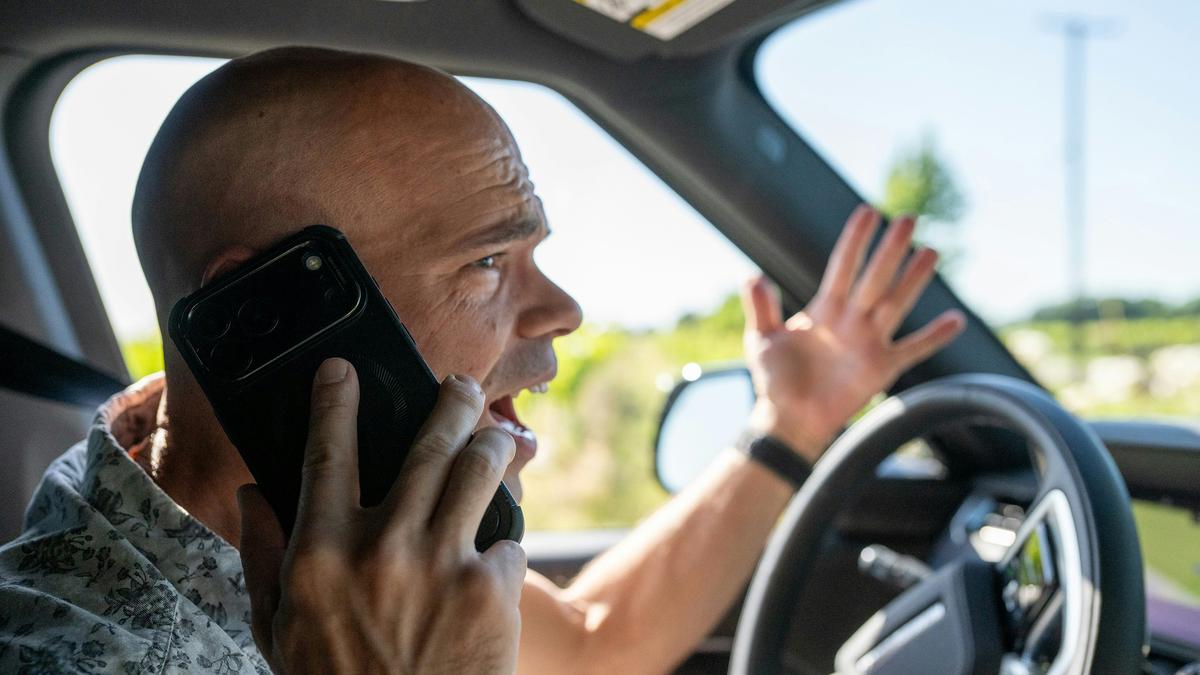
Her work traces the friction between technology and human society. I’m standing in the pouring rain trying to retrieve a parcel from a locker wall that just won’t open. I call the help desk and am greeted by Matt, a customer service chatbot.
To get my parcel, I must follow his instructions, describing the problem and speaking in full sentences. But it’s not working, so I ask for a human. Matt asks for my phone number.
He says ‘Thank you’ and asks how he can help, again. The rain is unrelenting, as is the bot’s cheeriness. When the locker finally clicks open, I hang up while he’s still speaking.
A week later, I find myself still thinking about that exchange – about my irritation, and about hanging up on him like that. My discomfort about how I treated the bot might not be unusual. In 2003, the media researchers Byron Reeves and Clifford Nass documented what they called the ‘media equation’: people apply genuine social reflexes to computers automatically, even when we know they aren’t conscious.
Some of us say ‘Please’ and ‘Thank you’ to chatbots or feel sorry for robot vacuum cleaners. The researchers’ explanation is not that we’re naive, exactly. Our brains process a voice – any voice – as a social presence, triggering social responses before conscious thought has had a chance to intervene.But this social reflex isn’t always kind.
When people talk to chatbots, we often seem to strip basic courtesy out of the exchange. Our messages become shorter, simpler and more profane, and in one analysis, more than half of conversations included at least one form of insult or verbal aggression. Chatbots are increasingly woven into daily life, which means that many of us are likely having these automatic – and frequently brusque – social responses multiple times a day.
Extract — continue reading at the source.